



For many investors, especially those with less than $100,000 to invest, the biggest question is often where to begin. Should you trade stocks? Follow successful investors? Copy someone else's strategy?
During a live Q&A, Lynette Zang and Martin Spranger challenged that way of thinking. Rather than focusing on short-term trading or trying to outperform the market, they emphasized a different objective entirely: preserving purchasing power and building a financial foundation designed to weather monetary uncertainty.
According to Lynette, the goal is not simply to make more dollars. The goal is to protect real wealth.
Before You Invest, Define Your Objective
The discussion began with a question from a viewer who had less than $100,000 to invest and wondered whether copying professional traders would be a smart approach.
Instead of recommending a specific investment, Lynette explained that the first step should always be understanding what the investor is actually trying to accomplish.
Every financial situation is different. Someone holding cash requires a different strategy than someone with retirement accounts, CDs, Treasury bills, or stocks.
Martin explained that this is why every conversation begins by evaluating:
- Where the money is currently held
- The investor's long-term goals
- Existing debt
- Overall financial position
- The appropriate strategy for protecting wealth
Rather than applying a one-size-fits-all solution, Zang International focuses on building a personalized strategy.
Trading Produces More Dollars, Not More Wealth
Lynette cautioned against confusing successful trading with genuine wealth creation.
Even if a trader successfully grows a portfolio denominated in dollars, she argued that the result is still ownership of a currency whose purchasing power continues to decline.
Using Zimbabwe's former $10 trillion banknote as an illustration, she emphasized a simple principle:
Ten trillion times zero is still zero.
Her point was not that traders cannot make money, but that accumulating more currency does little good if the currency itself continually loses purchasing power.
She also warned that professional traders ultimately have their own objectives, not necessarily the investor's.
Gold and Silver Are Viewed as Money, Not Trades
Martin explained that the conversation around physical gold and silver begins with a different premise.
Rather than viewing precious metals as speculative investments, they view them as money.
In contrast, paper currency continually loses purchasing power over time.
From this perspective, exchanging depreciating currency for physical gold and silver represents moving from something that steadily loses value into assets that have historically served as stores of wealth.
The objective is not short-term gains.
The objective is long-term wealth preservation.
Why Spot Prices Can Create Emotional Investing
One concern raised during the discussion was the emotional impact of watching daily fluctuations in gold and silver prices.
Lynette argued that many investors become discouraged because they focus on the paper spot market rather than the physical market.
She explained that the modern spot market is a trading market dominated by paper contracts rather than physical metal.
According to Lynette, investors should avoid allowing daily price movements to dictate long-term decisions about protecting wealth.
Instead of reacting emotionally to short-term volatility, she encourages investors to focus on their overall strategy.
A Strategy Focused on Purchasing Power
Lynette outlined several priorities that guide their planning process:
- Preserve today's standard of living
- Properly diversify assets held inside the financial system
- Evaluate fixed-rate debt
- Prepare for future opportunities
Rather than attempting to predict every market move, the focus is on protecting purchasing power throughout changing economic conditions.
She described today's financial landscape as one where:
- Gold remains undervalued relative to currency weakness.
- Many financial assets are significantly overvalued.
- Future market shifts may create opportunities for owners of tangible assets.
The objective is to preserve wealth now so that assets can later be exchanged for productive investments when valuations become more attractive.
Why Physical Ownership Matters
Throughout the discussion, Lynette repeatedly distinguished between owning paper claims and owning physical assets.
Holding a dollar, she noted, means holding a Federal Reserve Note, which is ultimately a promise to pay.
Physical gold and silver, by contrast, are tangible assets that exist independently of another party's promise.
She also emphasized the broad industrial and monetary demand for precious metals around the world, contrasting that with financial assets that depend on continued market confidence.
For Lynette, physical ownership removes many of the uncertainties associated with financial intermediaries.
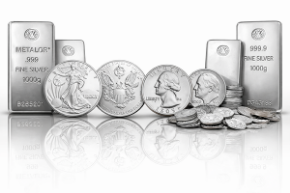
Small Silver Coins Can Still Play a Role
Another viewer asked whether older New Zealand coins containing 50% silver could still serve as useful barter pieces.
Lynette's answer was straightforward.
Yes.
She explained that silver content itself gives the coins value.
Whether a coin contains 50%, 90%, or another percentage of silver, it still represents tangible metal rather than paper currency.
She also shared that she personally purchased similar New Zealand silver coins during a recent trip.
Stop Trading. Start Investing.
Another viewer described experiencing repeated losses while attempting to trade independently.
Lynette's recommendation was simple:
Stop trading. Start investing.
Rather than pursuing constant short-term market activity, she encouraged building a solid foundation with physical assets first.
Once that foundation exists, individuals can choose whether they wish to pursue additional investment opportunities.
The key difference is that speculation should come after establishing financial security, not before.
The Purchasing Power of the Dollar Continues to Decline
To reinforce her point, Lynette encouraged viewers to examine publicly available data from the Federal Reserve Economic Data (FRED) database.
She noted that the purchasing power of the consumer dollar has declined dramatically over time.
She also discussed upcoming plans to compare Bureau of Labor Statistics (BLS) food basket pricing with actual grocery store prices to examine how official inflation figures compare with real-world costs.
The broader point remained consistent:
Purchasing power matters more than nominal dollar amounts.
Sound Money Versus Paper Promises
One of the strongest visual examples came from comparing a silver certificate with physical silver.
Historically, a silver certificate could be redeemed for actual silver.
Today, only the paper remains.
Lynette described physical gold and silver as sound money because their supply is naturally limited.
Paper currency, on the other hand, represents debt and promises that can be expanded indefinitely.
For investors focused on financial freedom and wealth preservation, she argued that this distinction is critical.
Gold Held at Home and Counterparty Risk
Lynette also referenced the Bank for International Settlements' position that physical gold held directly carries no counterparty risk.
Unlike financial assets that rely on another institution's ability or willingness to fulfill an obligation, physical ownership places control directly in the owner's hands.
That independence forms a key part of Zang International's sound money strategies.
Build the Foundation First
The central message throughout the discussion remained remarkably consistent.
Rather than chasing quick gains or attempting to outsmart increasingly complex financial markets, investors should first establish a durable financial foundation.
According to Lynette and Martin, that means focusing on:
- Preserving purchasing power
- Building a foundation with physical gold and silver
- Reducing emotional decision-making
- Diversifying appropriately
- Preparing for future opportunities instead of reacting to daily market swings
For those concerned about the long-term value of paper currency, they believe the objective should not be winning the trading game.
It should be protecting wealth before conditions become more challenging.
Learn More About Sound Money Strategies
Building long-term financial resilience starts with understanding the difference between speculation and wealth preservation. If you'd like to learn more about Zang International's sound money strategies, and how physical gold and silver may help protect purchasing power during periods of monetary uncertainty and economic change, connect with a Zang International Strategy Specialist today.

