



Introduction
In this live Q&A, Kenneth Mraz, Strategy Specialist at Zang International, stepped in for Lynette Zang while she recovered from a busy travel schedule following several speaking engagements. Kenneth opened the livestream by expanding on one of the most common questions clients ask: what really happens to real estate during a currency reset or hyperinflation.
Drawing from historical examples including the United States, Japan, Venezuela, and Weimar Germany, Kenneth explained why rising home prices do not necessarily represent increasing wealth. Instead, he argued that real estate values are heavily influenced by the availability of cheap credit and government intervention. He also discussed why property taxes, mortgage restructurings, and banking reforms could present significant risks during a monetary transition.
Following this presentation, Kenneth answered a wide range of viewer questions covering precious metals, mortgages, brokerage accounts, vault storage, stablecoins, and strategies for preparing financially for periods of monetary instability.
Question 1
"What are your thoughts on small fractional gold and silver like one-tenth of an ounce and smaller? Are they worth stacking or should someone wait until they can purchase a larger fraction?"
Kenneth explained that fractional precious metals play an important role within Zang International's sound money strategy.
He described the strategy as consisting of multiple layers, with the first layer focused on maintaining purchasing power during a period of hyperinflation. This "barter position" is designed to help individuals continue paying for everyday necessities if confidence in the currency deteriorates.
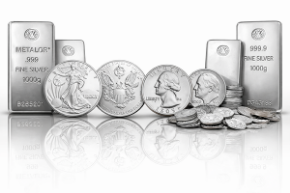
According to Kenneth, fractional gold and silver are well suited for this purpose because they provide greater flexibility than larger bars. He particularly highlighted constitutional silver, including pre-1965 dimes, quarters, and half dollars, as useful denominations for small transactions.
He also noted that fractional gold may provide additional flexibility if governments were to require certain forms of gold to be exchanged for fiat currency, allowing holders to preserve optionality while using depreciating currency before relying on their precious metals.
His overall recommendation was that investors should not feel discouraged if smaller denominations are all they can currently afford. Fractional gold and silver remain an important part of a comprehensive sound money strategy.
Question 2
"Hi, Kenneth and all. On another video, you said paying off mortgage loans etc. when currency devalued resulted in the government in Weimar reassessing debt and needing to repay it anyway after the reset. Is that right? Because that is the Zang plan. Did I not understand?"
Kenneth confirmed that this historical event is one of the scenarios Zang International considers when developing personalized financial strategies.
He explained that while paying off fixed-rate debt during hyperinflation may still be beneficial, the firm also prepares clients for the possibility that governments could partially reinstate mortgages following a currency reset, similar to actions taken during the Weimar Republic.
Rather than assuming one outcome, Kenneth said the strategy includes maintaining an additional financial cushion that could cover any reinstated obligations if they occur. If governments never take such action, clients simply retain greater purchasing power after the transition.
The goal, he said, is not to predict a single outcome but to prepare for multiple historical possibilities.
Question 3
"Hi, Kenneth. I loved your mega IPO video. You mentioned how technically nobody owns stock since we don't get the certificates, but does that mean that our brokerages are holding the certificates?"
Kenneth explained that most modern stocks are held in what is known as "street name," meaning investors generally do not possess direct legal ownership of individual stock certificates.
Using the analogy of an apartment building, he described brokerages as individual apartments while the larger ownership structure sits above them. He explained that ownership is recorded through centralized custodial systems rather than individual investors physically holding certificates.
Kenneth used this example to reinforce one of Zang International's broader themes: many financial assets exist as claims within interconnected financial institutions rather than as assets directly controlled by the investor.
He also pointed to increasing redemption restrictions in certain investment products as evidence that access to financial assets may not always remain unrestricted during periods of financial stress.
His broader message was that taking direct ownership of tangible assets removes many of the intermediaries present in traditional financial markets.
Question 4
"Is the only protection if you have gold as well as silver? If gold is above your financial investing ability, will only investing in silver be of any benefit?"
Kenneth emphasized that silver alone can still provide meaningful protection within a sound money strategy.
He explained that silver primarily serves as the barter component of the strategy, helping households maintain their standard of living during periods of currency instability by covering everyday expenses, emergency needs, and potentially rising property taxes.
He encouraged viewers not to think of purchasing precious metals strictly as an investment. Instead, he described it as exchanging fiat currency for tangible assets that have historically functioned as money.
For those who cannot yet afford gold, Kenneth said purchasing silver still places them in a stronger position than relying entirely on financial assets denominated in paper currency.
He encouraged individuals to begin with whatever amount fits their financial circumstances rather than waiting until they can purchase larger quantities.
Question 5
"When vaulting, can pre-33 gold coins be insured at the retail cost of the coin?"
Kenneth explained that privately vaulted pre-1933 gold coins can generally be insured based on their current market value and that insurance coverage can be periodically updated as valuations change.
He contrasted this with bullion stored at home, noting that homeowners insurance typically provides only limited coverage for precious metals unless additional riders are purchased.
Kenneth also discussed the historical distinction between bullion and pre-1933 U.S. gold coins, explaining that Zang International believes collectible pre-1933 gold may occupy a different legal position than bullion during certain historical monetary events.
Because of this, he stressed the importance of periodically reviewing insurance coverage so it accurately reflects the current value of the collection.
Question 6
"I have Social Security and monthly pension deposited into my bank. So, what do I do to close my bank account and receive payments if I still go into stable coins and how so receive payments still if I go into stable coins?"
Kenneth explained that under today's financial system, government benefits are generally distributed through traditional banking channels.
If someone wanted to convert those payments into stablecoins, he said they would first need to receive the funds through their existing banking relationship before exchanging them into digital assets.
Looking ahead, Kenneth speculated that governments could eventually distribute benefits directly through digital wallets if stablecoins or other digital currencies become more widely adopted. However, he emphasized that this was his expectation based on current trends rather than a certainty.
Until such changes occur, he noted that recipients would likely still need to maintain access to the traditional banking system in order to receive their benefits.
Question 7
"If your property tax is around $1,000 a year, what specific pre-33 coins would be good to collect to make that payment?"
Rather than recommending a specific coin, Kenneth explained that the appropriate solution depends on each person's complete financial picture.
He said Zang International builds customized strategies based on an individual's circumstances, including potential changes in property taxes, existing assets, debt, and overall financial goals.
Kenneth emphasized that the objective is to eliminate weak spots within a client's strategy rather than simply recommending one particular coin or denomination. By reviewing a person's complete situation, the strategy specialists can recommend an allocation designed to address both current needs and possible future scenarios.
He also noted that Zang International has access to pre-1933 U.S. gold coins and can help clients both develop and implement their personalized sound money strategy.
Question 8
"Genuine question. Wouldn't an event similar to Weimar's mortgage revaluation throw a huge wrench into the wealth transfer endgame strategy? Any tips on how you would navigate this? Thanks."
Kenneth explained that, from Zang International's perspective, the wealth transfer occurs through the historical revaluation of gold rather than through eliminating debt alone.
He described mortgage reinstatement as an accounting mechanism governments may use to stabilize banks after a monetary reset. According to Kenneth, the historical wealth transfer would already have occurred before governments potentially revisited mortgage contracts.
Because of that possibility, he said their strategy prepares clients for both outcomes by accounting for the possibility of mortgage reinstatement while positioning assets that may benefit from a monetary transition.
His overall message was that preparing for multiple historical possibilities provides greater flexibility than assuming only one outcome will occur.
Question 9
"I'm confused with the explanation of the revaluation act in 1923. Were the people who had their homes paid off prior to the reset also affected and given new variable rate mortgages in the new fiat currency or is it only the people who paid their home off when the reset hit who were affected?"
Kenneth explained that historical records indicate the mortgage reassessments occurred for debts paid during the hyperinflationary period itself rather than for mortgages that had already been fully satisfied before hyperinflation began.
According to his explanation, governments could identify the specific timeframe in which debts were repaid using currency that had rapidly lost purchasing power. If emergency legislation were later enacted, those transactions could potentially become subject to reassessment.
Kenneth stressed that no one knows precisely how a future monetary reset would unfold. Instead, he believes investors should understand what has happened historically and consider how similar actions could affect financial planning today.
His recommendation was to build a strategy that anticipates these possibilities rather than reacting after policy changes occur.
Question 10
"So what I have in cash, should I turn into stable coins or should I keep cash for now? Do we lose that at change? You say own sound money. Do you mean hold on to some fiat?"
Kenneth said that whether to convert cash into stablecoins is ultimately a personal decision, but he personally would not rush into doing so while traditional cash remains available.
He explained that purchasing stablecoins means exchanging physical or bank-held dollars for privately issued digital tokens backed by financial assets. In his view, that exchange removes direct possession of the underlying cash.
Kenneth also clarified that Zang International's strategy includes maintaining a reserve of physical fiat currency outside the banking system, generally enough to cover three to six months of living expenses.
According to Kenneth, this reserve acts as the first financial buffer during periods of instability, allowing depreciating currency to be spent first while preserving precious metals for later stages of a monetary transition.
Question 11
"What would purchasing property in a reset look like?"
Kenneth explained that purchasing real estate during a currency reset would likely be challenging because lending historically becomes extremely limited during periods of monetary instability.
Without functioning mortgage markets, buyers would likely need to purchase property outright using available capital.
Rather than buying during the reset itself, Kenneth said Zang International generally prefers waiting until the financial system stabilizes and market conditions become clearer. At that point, clients can evaluate which locations and opportunities offer the strongest long-term value.
He also emphasized that Zang International views itself as providing ongoing guidance beyond simply selling precious metals. According to Kenneth, the firm's strategy includes helping clients identify potential opportunities after a monetary transition, including converting a portion of their precious metals into local currency when appropriate to purchase real estate outright.
Question 12
"Is it possible that the government could confiscate gold like they did in 1933, so you can't use it to pay off a mortgage or pay taxes?"
Kenneth acknowledged that many investors share this concern and said it is one of the reasons Zang International distinguishes between bullion and pre-1933 U.S. gold coins within its overall strategy.
He explained that the firm's approach is designed around historical precedent, which it believes shows different treatment for different categories of gold during previous monetary events.
Even if governments were to restrict certain forms of gold ownership, Kenneth said investors may still have options available depending on the type of assets they hold. He also noted that silver could continue serving an important role for everyday transactions and maintaining purchasing power.
His central message was that preparing a comprehensive strategy before a financial crisis develops provides greater flexibility regardless of how governments ultimately respond during a monetary transition.
Question 13
"I'm not sure why one's real estate taxes would go up when you said four zeros get knocked off of wages. House values and mortgages seem to me the taxes would also be four zeros. Did I miss something?"
Kenneth explained that removing zeros from a currency, known as redenomination, is primarily an accounting exercise designed to simplify large numbers after inflation has dramatically reduced a currency's purchasing power.
He emphasized that while home prices, wages, and mortgage balances may all appear smaller after a redenomination, the real issue is purchasing power, not the number of zeros attached to prices.
According to Kenneth, governments could still reassess property values and adjust property taxes independently of the redenomination. The concern is whether homeowners would still have sufficient purchasing power to pay those taxes, regardless of how many zeros are removed from the currency.
He compared the process to a reverse stock split, where the number of shares changes but the underlying economic reality remains the same. His broader point was that a comprehensive sound money strategy should prepare for multiple policy outcomes, including possible changes to property tax assessments.
Question 14
"What about Europeans? You always say call us, but can I call from Europe? How?"
Kenneth confirmed that Zang International works with clients around the world and offers virtual consultations through Zoom for those outside the United States.
While acknowledging that each country has its own legal and financial nuances, he explained that the firm's strategy is built around historical currency life cycles and central banking patterns that have appeared globally.
He reiterated Lynette Zang's longstanding position that the current financial challenges are not isolated to a single country. Because the U.S. dollar serves as the world's reserve currency, Kenneth believes monetary disruptions can affect financial systems internationally.
For that reason, he said Zang International's approach is designed to help clients prepare regardless of where they live, while also considering local regulations and individual circumstances.
Question 15
"What are the chances that when they implement digital currency, they will give us a limited time to convert precious metal before they make or shut off our ability to use it?"
Kenneth pointed to historical examples, particularly Executive Order 6102 in 1933, where the U.S. government provided a period during which citizens could surrender gold before ownership restrictions took effect.
Based on that historical precedent, he believes governments could potentially offer a similar conversion window during a future monetary transition.
He suggested that authorities could encourage participation by offering an attractive exchange price for precious metals before implementing restrictions on ownership or transactions.
Kenneth emphasized that this view is based on historical patterns rather than a prediction of future government policy. His broader point was that understanding historical playbooks can help investors recognize potential scenarios before they unfold.
Question 16
"How do you feel about the one-tenth silver coins that are .999 pure?"
Kenneth recommended comparing the purchasing power received for each dollar spent when evaluating fractional silver products.
While he acknowledged that one-tenth ounce .999 fine silver coins have their place, he believes one-ounce silver rounds generally provide greater value because they concentrate more silver into a single purchase.
For smaller denominations intended for barter, Kenneth said he personally prefers constitutional silver coins, such as pre-1965 dimes, quarters, and half dollars, because they often provide a more favorable exchange ratio relative to their cost.
His advice was to evaluate each option based on how efficiently it contributes to an individual's barter position within an overall sound money strategy.
Question 17
"Kenneth, back to your mega IPOs video. You mentioned how the repo market is at a fundamental low, but how is this even possible? There's also such a liquidity problem in the system."
Kenneth explained that although overnight repo and reverse repo balances have declined significantly, he does not believe the banking system has yet reached a true liquidity crisis.
Instead, he distinguished between declining repo balances and the broader issue of leverage created through derivatives and financial markets.
According to Kenneth, large money supply figures and increasing monetary velocity indicate that liquidity still exists within the system, even though structural weaknesses remain.
He also discussed the potential impact of stablecoins, noting that many are backed by short-term government debt and repo-related instruments. Because of that, he believes growth in stablecoins could eventually increase activity within repo markets, making those markets an important indicator to monitor as the current monetary system evolves.
Kenneth concluded that he watches these markets closely because they may provide additional signals regarding the later stages of a currency's life cycle.
Question 18
"Shouldn't copper be considered too? It's going to be the backbone for all AI hardware, electric power distribution, bus bars, transformers, and electrical grids."
Kenneth acknowledged copper's importance in modern industry but explained why it is not included in Zang International's sound money strategy.
He distinguished between monetary metals and industrial metals, describing gold as primarily monetary and silver as both monetary and industrial. Copper, platinum, and palladium, by comparison, were characterized as primarily industrial metals whose value depends on a functioning economy and strong industrial demand.
Kenneth argued that during historical currency resets, economic activity tends to contract sharply, reducing demand for industrial commodities. For that reason, he believes industrial metals may not provide the same level of protection during periods of monetary instability.
Instead, he said the strategy prioritizes physical gold and silver because of their historical monetary role and their ability to help preserve purchasing power during financial crises.
Question 19
"How can you state gold and silver have no counterparty risk so boldly and use fear by a proven counterparty, the government, to recommend pre-1933 gold? Please explain."
Kenneth clarified that his comments distinguish between different forms of precious metals and how they have been treated historically.
He explained that, under current international banking standards, privately held physical gold is generally considered to have no counterparty risk because ownership does not depend on another party fulfilling a contractual obligation. However, he emphasized that governments retain the authority to change laws, meaning legal treatment of any asset can change over time.
According to Kenneth, this possibility is one reason Zang International incorporates pre-1933 U.S. gold coins into its sound money strategy. Based on historical precedent, the firm believes these coins have occupied a different legal position than modern bullion during previous monetary events.
Kenneth stressed that the strategy is built around preparing for multiple outcomes rather than assuming only one scenario will occur. If governments were to treat different forms of gold differently in the future, clients would already have positioned themselves with additional options. If no such policy changes ever occur, investors still own a tangible asset that has historically preserved purchasing power over long periods.
He concluded by emphasizing that having choices provides flexibility during periods of uncertainty, and that preserving those options is a central objective of the firm's strategy.
Closing Summary
Throughout the livestream, Kenneth Mraz focused on one central message: successful financial preparation is not about predicting a single future outcome but about understanding historical monetary patterns and building a strategy that can withstand multiple possibilities.
Using examples from the United States, Japan, Venezuela, and Weimar Germany, he discussed how real estate, banking systems, mortgages, taxes, and currencies have historically behaved during periods of financial instability. He argued that many traditional financial assumptions break down during currency transitions and encouraged viewers to think beyond conventional investment planning.
The audience questions expanded on these topics, covering fractional precious metals, mortgage reinstatements, brokerage ownership, stablecoins, real estate purchases after a reset, vault storage, confiscation concerns, property taxes, repo markets, industrial metals, and the role of pre-1933 gold.
Throughout the discussion, Kenneth consistently emphasized Zang International's philosophy of preparing for multiple historical scenarios through personalized sound money strategies centered on physical gold and silver, with the goal of preserving purchasing power and maintaining financial flexibility during periods of monetary uncertainty.

