

The Debt Bubble Is Reaching Its Breaking Point
For decades, the global financial system operated on what Lynette Zang describes as “financial magic.”
Whenever economic trouble appeared, central banks and governments responded the same way:
- Lower interest rates
- Create more debt
- Print more money
- Inject liquidity into markets
And for a long time, it appeared to work.
Stock markets climbed higher. Real estate prices surged. Consumers borrowed more. Governments expanded spending. Corporations leveraged cheap debt to fuel growth.
As currencies steadily lost purchasing power, rising asset prices created the illusion that the system remained stable and under control.
But according to Lynette Zang, the system has now entered a dangerous new phase where the very tools used to sustain the economy are becoming destabilizing forces themselves.
The Sorcerer’s Apprentice and the Financial System
Lynette compares today’s financial system to The Sorcerer’s Apprentice.
In the story, the apprentice discovers powerful magic that initially makes life easier. But eventually, the forces unleashed become uncontrollable. Every attempt to fix the problem only makes it worse.
That, she argues, mirrors the modern debt-based monetary system.
For decades, falling interest rates allowed governments, corporations, and consumers to take on increasingly larger debt loads. Cheap money sustained the appearance of growth.
Now, however, interest rates are rising at the exact moment global debt levels have exploded.
This combination creates what Lynette calls a “mathematical trap.”
Why Rising Bond Yields Matter
One of the biggest warning signals is coming from the bond market.
Lynette points to the 30-year Treasury yield reaching levels not seen since 2007, just before the Great Financial Crisis fully unfolded.
This matters because the bond market forms the foundation of the global financial system.
Higher long-term yields signal that investors are becoming increasingly nervous about the future and demanding more compensation for risk.
According to Lynette, this is not isolated to the United States.
Countries around the world, including:
- Japan
- The United Kingdom
- Europe
- The United States
are all experiencing rising yields simultaneously.
The global economy, especially after 2008, became dependent on permanently low interest rates and quantitative easing. Inflation disrupted that model.
Now central banks face a severe dilemma:
- Keep rates high and risk destabilizing the debt structure
- Lower rates and accelerate inflation further
The End of the 40-Year Low Interest Rate Era
For more than four decades, interest rates generally trended lower.
That changed in 2022 when inflation forced central banks to aggressively raise rates.
Lynette describes this as a major “pattern shift.”
Across the entire yield curve, 2-year, 10-year, and 30-year yields are all breaking out higher simultaneously. From a technical perspective, she views this as evidence that markets are repricing risk across the entire financial system.
The consequences are enormous because so much existing debt must now be refinanced at higher rates.
Debt that was already difficult to manage near zero interest rates becomes exponentially more dangerous in a higher-rate environment.
The Debt Bubble Is Feeding on Itself
Lynette explains that after every financial crisis, policymakers responded with even more debt creation.
After 2008:
- Governments borrowed more
- Corporations borrowed more
- Consumers borrowed more
- Central banks massively expanded balance sheets
The system survived by expanding debt faster than economic growth.
That strategy only functioned while rates remained near zero.
Now the cost of servicing debt is exploding.
Federal interest payments are surging as governments borrow increasing amounts simply to pay interest on existing obligations.
According to Lynette, this is the core structural problem:
The debt begins feeding on itself.
Higher rates increase financing costs for governments, corporations, and consumers alike.
This creates:
- Slower economic growth
- Reduced investment
- Corporate layoffs
- Rising financial stress
- Weakening consumer purchasing power
Consumers Became Dependent on Debt
Lynette emphasizes that consumers were pushed into relying on debt to maintain living standards.
Credit cards, auto loans, student loans, and personal debt all expanded rapidly because real purchasing power continued deteriorating beneath the surface.
She contrasts life in 1971 with today:
- Average wages in 1971 were roughly $10,500
- A single wage earner could support a family of four
Today:
- Average wages are nearly $75,000
- Most households require two incomes
- Many families still live paycheck to paycheck
According to Lynette, inflation steadily destroyed purchasing power while debt temporarily masked the problem.
Inflation Is Destroying Currency Purchasing Power
Lynette argues that inflation is not simply about rising prices.
Inflation represents the ongoing loss of purchasing power in fiat currency systems.
As governments and central banks create more money and debt, the value of existing currency declines.
She points to Federal Reserve purchasing power data showing the dollar steadily collapsing over time, noting that by April 2026 the dollar had fallen below 3 cents in purchasing power according to the Federal Reserve’s measurements.
This creates a devastating cycle:
- More debt creation fuels inflation
- Inflation weakens purchasing power
- Consumers borrow more to maintain living standards
- Higher rates increase debt stress
- Governments create even more debt to stabilize the system
Lynette describes this as the “debt money doom loop.”
Central Banks Are Trapped
According to Lynette, central banks now face an impossible choice.
If they keep rates elevated:
- Interest expenses compound faster than economic growth
- Debt structures become increasingly unstable
- Defaults and financial stress rise
If they lower rates:
- Inflation accelerates
- Currency confidence weakens further
- Purchasing power collapses faster
She argues that this is the structural end stage of every debt-based fiat monetary system.
Historically, when confidence in paper currency weakens, societies begin moving back toward sound money and tangible assets.
Why Gold and Silver Are Reemerging
Lynette explains that gold and silver never stopped being monetary assets. They were simply suppressed and hidden within the modern financial system.
Now they are reemerging.
Silver: The “Fuse” of Monetary Stress
Silver serves both industrial and monetary functions, making it highly sensitive to systemic instability.
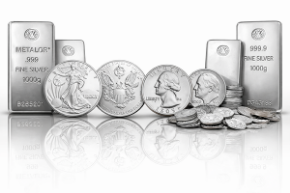
Lynette describes silver as “the fuse” because it reflects pressure building inside the financial system.
Silver demand comes from:
- Technology
- Energy systems
- Medicine
- Industrial manufacturing
- Monetary demand
At the same time, physical silver supplies remain limited because much of the metal is consumed industrially.
When industrial demand collides with monetary demand during periods of instability, volatility increases significantly.
Gold: The Anchor Outside the System
Gold behaves differently.
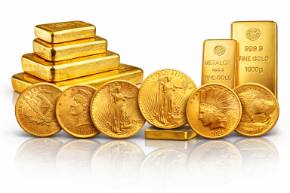
Lynette emphasizes that gold carries zero counterparty risk because it is not someone else’s liability.
Unlike debt-based financial assets, gold:
- Does not depend on promises
- Does not rely on leverage
- Does not require confidence in central banks
- Has survived every major monetary reset in history
As confidence in fiat systems deteriorates, gold historically reasserts itself as a monetary asset and store of value.
Sound Money Strategies and Wealth Preservation
Lynette says preserving purchasing power becomes more important than chasing returns during periods of monetary transition.
That is why Zang International focuses on sound money strategies built around:
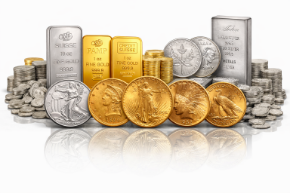
- Physical gold and silver
- Tangible assets
- Food and water security
- Energy independence
- Barterability
- Community resilience
- Wealth preservation
She stresses the importance of holding real wealth outside the financial system itself.
According to Lynette, gold and silver serve as the bridge that transfers purchasing power from one monetary system into the next.
Preparing for a New Monetary Regime
After studying currency life cycles since 1987, Lynette says there is “absolutely no doubt” that the world is entering a new monetary regime.
She encourages people to prepare now rather than wait for broader public recognition of the structural shift already underway.
Her message extends beyond investing alone.
Lynette urges people to:
- Build local community connections
- Learn practical skills
- Support local food systems
- Strengthen self-sufficiency
- Focus on tangible wealth preservation
She believes individuals must reclaim financial power through sound money strategies and ownership of real, tangible assets.
Final Thoughts
Lynette Zang’s warning is clear: the debt-based monetary system is approaching a critical turning point.
Rising bond yields, exploding debt servicing costs, weakening purchasing power, and collapsing consumer confidence are all signaling that the old system is becoming increasingly unstable.
In response, gold and silver are once again emerging as essential monetary assets and tools for wealth preservation.
At Zang International, the focus remains on helping individuals understand these structural changes and prepare with sound money strategies centered around physical gold and silver, tangible assets, and long-term financial resilience.
If you want to learn how to protect your purchasing power and prepare financially for the changing monetary system ahead, connect with Zang International today to explore customized sound money strategies built around physical gold and silver ownership.

