


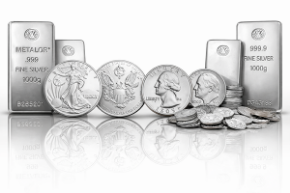

For investors looking to protect their wealth with gold and silver, one distinction can change everything: exposure is not the same as ownership.
A gold ETF may move with the gold market. It may give investors shares connected to a trust designed to track that market. But according to Lynette Zang, that does not necessarily mean an individual investor owns gold that can be taken into physical possession.
That distinction sits at the heart of a broader conversation about tangible assets, productive land, government rules, counterfeit risk, and the importance of having both an entry and an exit strategy.
Using Gold and Silver to Buy Productive Land
One viewer asked whether accumulating precious metals today could eventually provide a way to purchase productive land.
For Lynette, that is exactly what the strategy is designed to accomplish.
Her view is based on relative valuations. Gold and silver are undervalued, while productive land has been targeted for reflation and has become overvalued. During a major monetary transition, she expects that relationship to reverse.
The transition itself, she warned, is unlikely to be easy, particularly given the enormous amount of debt in the system. She compared what could unfold more closely to the conditions surrounding 1933 than to the environment people experience today.
But that disruption is also what could change the relative purchasing power of different assets.
If productive land becomes less expensive relative to gold and silver, physical precious metals accumulated beforehand could potentially be converted into productive property later.
That is the purpose of the sound money strategy: preserve purchasing power in tangible assets so that those assets can eventually be converted into other forms of productive wealth when valuations shift.
Can Governments Control Gold Without Confiscating It?
Another viewer raised an important question: Could governments effectively control private gold ownership without ever directly confiscating the metal?
Lynette's answer was that governments already exert control through taxation, laws, rules, classifications, and perception management.
She pointed to the language surrounding gold ownership as an example. Someone who accumulates gold may be labeled a "gold bug," while accumulating stocks is commonly portrayed as positive participation in the economy.
In Lynette's view, those differences in language matter because perception can influence financial behavior.
She also discussed how the system distinguishes between saving and hoarding depending on how and where assets are held. Her broader point was that governments do not necessarily need a dramatic physical confiscation to influence how people own, store, and use gold.
Control can also be exercised through the rules surrounding the asset.
Why Gold Classification Matters
That leads directly to another issue Lynette considers important: how gold is classified.
She explained that she prefers gold that falls under a collectible classification rather than a monetary classification. As an example, she held up an old gold coin that cannot be held inside an IRA.
For Lynette, that distinction provides an additional level of protection. She connected it to the experience of her Uncle Al, who was able to retain thousands of ounces of gold because of the classification of the gold he owned.
The takeaway is that owning gold is not simply about weight. The legal and regulatory classification of the asset can also matter.
Gold ETFs: What Do You Actually Own?
The ownership question becomes even more important when looking at gold ETFs.
A viewer who was new to ETFs asked whether units could be used to liquidate the underlying gold into personal possession.
Lynette explained that an individual investor generally cannot do that. Certain authorized entities, such as major financial institutions acting in the appropriate capacity, may be able to remove gold from the system, but an ordinary shareholder does not have the same ability.
Instead, she explained, the investor owns shares in a trust.
The trust is structured to imitate movements in the spot gold market. That provides price exposure, but Lynette emphasized that price exposure and direct ownership are two very different things.
An ETF investor does not necessarily own specific gold that can simply be claimed and taken home.
That is why Lynette repeatedly returns to a simple principle:
If you do not hold it, you do not own it.
For anyone pursuing wealth preservation or economic collapse preparation, understanding exactly what is owned, who controls it, and whether it can be accessed directly is an essential part of sound money strategies.
Physical Gold and Silver Have Risks Too
Direct ownership does not eliminate every risk.
A viewer correctly pointed out that when buying physical gold and silver, an investor also has to consider authenticity. What appears to be precious metal could potentially contain something else, such as tungsten.
Lynette agreed that this is a risk investors should actively consider rather than ignore.
One simple test involves magnetism. Gold and silver are not magnetic, so Lynette suggested keeping a strong magnet available when examining items that are supposed to be precious metals.
If an item marked as sterling silver, .925 silver, or precious metal reacts to the magnet, that is an immediate warning sign.
She also referenced other testing methods, including the ping test, and pointed viewers toward a previous video explaining different ways to test physical metals.
Why a Reputable Precious Metals Dealer Matters
Testing is only one layer of protection.
Lynette emphasized that one of the most important ways to reduce authenticity risk is to work with a reputable dealer and established wholesalers.
Zang International works with mint-direct wholesalers. Lynette also explained why she values slabbed and professionally graded coins. The verification and grading process helps establish that a coin is genuine and is what it is represented to be.
That process is important not only when purchasing physical gold and silver, but also when eventually selling them.
A complete sound money strategy should not stop with the purchase.
It should include an exit strategy.
Buying Gold Is Only the Entry Plan
Lynette stressed that Zang International's approach considers liquidation from the beginning.
When gold purchased through Zang International is eventually sold back through the same wholesale relationships, the wholesaler already knows what the coins are. According to Lynette, that can make the transaction happen very quickly.
Gold and silver purchased somewhere else can still be liquidated through Zang International, but the process takes longer.
The metal first has to be sent in, forwarded to the wholesaler, and authenticated. Only after the wholesaler verifies that the metal is what the owner says it is can the remainder of the transaction proceed.
Lynette estimated that this verification process could add approximately a week to the transaction.
The lesson is practical: think about how an asset will eventually be sold before buying it.
Physical gold and silver are not merely assets to acquire and forget. Within a broader wealth preservation strategy, investors should understand both how they will enter and how they will exit.
Sovereignty Begins With What You Choose to Own
Whether the discussion is about productive land, government rules, collectible classifications, ETFs, or counterfeit precious metals, each issue ultimately returns to the same question:
What do you actually own?
An asset that tracks the price of gold is not necessarily the same thing as physical gold that an individual directly controls. Likewise, owning physical precious metals requires careful attention to authenticity, classification, storage, and eventual liquidation.
For Lynette, those distinctions become increasingly important as the financial system changes.
Gold and silver can play a role in preserving purchasing power today with the goal of converting that wealth into other productive assets when circumstances and valuations change. But a sound money strategy begins with understanding the difference between a financial claim and a tangible asset.
As Lynette put it, sovereignty begins with what you choose to own.
Build a Sound Money Strategy Around Real Ownership
Understanding what you own is the first step. Building a plan for how that wealth will protect you through monetary and economic change is the next.
Learn more about Zang International's sound money strategies and how physical gold and silver can be incorporated into a broader plan for wealth preservation, financial freedom, and preparation for major changes in the financial system.

