

Q&A Summary
Question:
"Hi Lynette, there is some talk about government confiscation of gold held by citizens. How much gold does the general public own?"
Lynette Zang's Answer:
Lynette explained that ownership levels vary by country. Nations such as India and Vietnam have populations that are much more gold-oriented due to previous currency resets and financial crises.
In the United States, she believes precious metals ownership remains extremely low, estimating that less than 1% of Americans own physical gold and silver, while global ownership is likely below 3%.
She emphasized the importance of educating people about sound money and highlighted the purchasing power difference between modern currency and silver coins. According to Lynette, physical gold and silver retain monetary characteristics regardless of their form, whether bullion, jewelry, or sterling silver products.
Question:
"What do you think about Marsh's theory about fighting our deficit?"
Lynette Zang's Answer:
After reviewing the theory, Lynette focused on its discussion of systemic inequities and data-driven decision-making. She compared the concept to how policymakers often rely on flawed economic data.
She argued that distorted data leads to poor conclusions and criticized Keynesian economic policies that rely heavily on debt expansion. In her view, faulty data creates faulty outcomes.
Question:
"When the overnight reset happens, what happens to dollar prices?"
Lynette Zang's Answer:
Lynette described historical currency resets as periods when fiat currencies lose substantial purchasing power while gold and silver tend to hold their value for a period afterward.
She referenced historical examples where currencies experienced dramatic devaluations, sometimes approaching a 1,000-to-1 reset ratio. In such scenarios, she believes physical gold and silver provide an opportunity to preserve purchasing power while debt obligations become easier to satisfy with devalued currency.
Question:
"Will the U.S. Treasury reprice the gold held by the government to fund the Bitcoin reserve, and what would that do to gold prices?"
Lynette Zang's Answer:
Lynette stated that every country maintains a gold revaluation account, but she does not believe it would make sense to sell gold reserves to purchase Bitcoin.
She argued that gold remains a strategic monetary asset and suggested that selling it would weaken the nation's fiscal position. If a significant government gold sale exposed shortages or delivery issues, she believes it could cause a sharp repricing in gold markets.
Lynette reiterated her focus on:
- Food
- Water
- Energy security
- Security
- Barterability
- Wealth preservation
- Community
- Shelter
These areas form the foundation of her sound money strategy.
Question:
"I am pulling out my 401(k), approximately $45,000. I want to buy all pre-1933 gold. Is that a smart move or should I diversify?"
Lynette Zang's Answer:
Lynette said there is no one-size-fits-all answer.
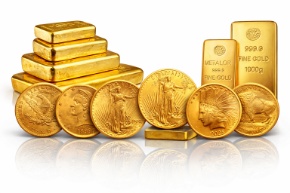
She explained that portfolio construction should be based on individual goals, debt obligations, lifestyle needs, and wealth preservation objectives. While she personally owns pre-1933 gold and historic foreign gold coins, she emphasized that a comprehensive strategy often includes multiple forms of gold and silver.
She encouraged viewers to build a plan around:
- Wealth preservation
- Fixed-rate debt management
- Future financial goals
- Barterability
- Income needs
Question:
"So if you go to bed with $1,000 in the bank and wake up with one, what is the value of cash outside the system?"
Lynette Zang's Answer:
Lynette stated that cash would suffer the same loss of purchasing power because the underlying currency itself would be devalued.
She pointed viewers to Federal Reserve purchasing power charts, which she frequently references to demonstrate the long-term decline in the dollar's buying power.
Question:
"If the central counterparty (CCP) runs out of liquidity and the Fed backstops it, does the taxpayer once again pay for big banks' bad bets?"
Lynette Zang's Answer:
Lynette answered yes.
She argued that central bank intervention effectively transfers losses to the broader public through money creation and inflation. She also expressed concerns about growing influence from large corporations and stablecoin systems that she believes could increase financial centralization.
Question:
"Where do you buy your gold and silver?"
Lynette Zang's Answer:
Lynette explained that Zang International works with multiple wholesalers and focuses on creating personalized sound money strategies rather than simply selling metals.
She emphasized the importance of having both entry and exit strategies and understanding how precious metals fit into a broader financial preparedness plan.
Question:
"Why isn't there a dollar-to-silver ratio?"
Lynette Zang's Answer:
Lynette explained that silver's value should ultimately be evaluated by purchasing power and fundamental value rather than simply comparing it to fiat currency.
She argued that spot prices reflect paper market activity and that true supply-and-demand pricing is increasingly shifting toward physical markets.
Question:
"Did the creation of the paper financial system in 1913 turn the middle class into a vehicle for wealth transfer?"
Lynette Zang's Answer:
Lynette discussed the transition from gold-backed currency to Federal Reserve Notes and argued that expanding credit fueled the Roaring Twenties.
According to her analysis, increasing access to debt created an illusion of wealth, encouraged speculation, and contributed to conditions that preceded the Great Depression.
She also discussed:
- Margin debt
- Stock market speculation
- Federal Reserve policy
- Gold confiscation in 1933
- Long-term purchasing power decline
Question:
"If Mexico goes fully digital, where do you use cash, gold, or silver?"
Lynette Zang's Answer:
Lynette said gold and silver remain valuable because they have broad global demand.
She noted that physical gold and silver can always be converted into whatever legal currency exists at the time. She emphasized that their usefulness comes from their widespread acceptance and monetary history rather than any particular payment system.
Question:
"What would be a good silver price before converting silver into gold?"
Lynette Zang's Answer:
Rather than focusing solely on price ratios, Lynette recommends evaluating the function of each asset within a strategy.
She views silver primarily as a barter and transactional asset, while gold serves a broader wealth preservation role. She believes strategy should be based on objectives rather than speculation.
Question:
"What does silver look like after a gold reset?"
Lynette Zang's Answer:
Lynette explained that historically the gold-to-silver ratio tends to narrow as monetary stress increases and then widen again during full hyperinflationary conditions.
She described silver as the more volatile monetary metal while gold serves as the primary monetary anchor.
Question:
"Are proof gold and silver coins worthwhile investments?"
Lynette Zang's Answer:
Lynette said she personally does not own proof coins.
Her concern is that proof coins often carry significant premiums that may not be fully recovered when sold. She prefers pre-1933 gold and other historic monetary gold coins.
Question:
"What are your thoughts about Bitcoin and what could replace the dollar?"
Lynette Zang's Answer:
Lynette stated that she does not believe Bitcoin will become the next global currency.
Instead, she believes stablecoins and potentially IMF-related monetary structures such as SDRs (Special Drawing Rights) are more likely candidates because they already have existing institutional frameworks and global participation.
She emphasized that regardless of future monetary systems, physical gold and silver remain relevant because they can be exchanged for whatever currency becomes dominant.
Question:
"Can you explain in simple terms what a stablecoin is?"
Lynette Zang's Answer:
Lynette described stablecoins as digital tokens backed one-for-one by fiat currency reserves.
According to her explanation:
- Stablecoins are typically issued by corporations.
- They are backed by dollars.
- Reserve assets are often invested in government debt.
- The system increases demand for government debt.
She views stablecoins as an extension of the existing fiat system rather than a replacement for it.
Question:
"If the U.S. plans to reset its currency with Bitcoin as a reserve asset, how would that impact gold?"
Lynette Zang's Answer:
Lynette rejected the idea that Bitcoin could replace gold as a reserve asset.
She emphasized that gold's broad global demand and long monetary history distinguish it from digital assets. She believes gold's role remains secure regardless of future monetary changes.
Question:
"Would you sell precious metals to get out of debt?"
Lynette Zang's Answer:
Yes, but only strategically.
Lynette explained that part of her sound money strategy involves potentially using a portion of precious metals holdings to eliminate fixed-rate debt during a currency reset or major monetary transition.
However, she stressed that the timing and planning behind such decisions are critical.
Question:
"I read somewhere the U.S. plans to reset with stablecoins backed by gold."
Lynette Zang's Answer:
Lynette believes that any successful future monetary system must ultimately incorporate gold because of its historical role as sound money.
She suggested that digital systems could coexist with redeemable gold, but she emphasized that public trust and actual redemption rights would be essential.
Question:
"Why do people confuse debt for wealth?"
Lynette Zang's Answer:
Lynette believes the educational system largely fails to teach monetary history.
She argued that many people are never taught:
- Gold and silver were once money.
- Inflation erodes purchasing power.
- Debt-based systems encourage borrowing.
- Wealth and debt are not the same thing.
She encouraged viewers to educate themselves on monetary history and understand how inflation affects long-term wealth.
Question:
"If there is a currency reset, will debt be reduced proportionately?"
Lynette Zang's Answer:
Lynette said debt is rarely treated proportionately during monetary transitions.
She explained that governments and financial institutions often restructure or reindex obligations in ways designed to protect the banking system.
This is one reason she emphasizes preparing in advance and maintaining assets outside the financial system.
Question:
"When silver reaches $1,800 per ounce, what would a collectible silver commemorative coin be worth?"
Lynette Zang's Answer:
Lynette cautioned against focusing solely on nominal price levels.
She explained that in a hyperinflationary environment, a high silver price does not necessarily indicate greater purchasing power. What matters is what the silver can actually buy.
She encouraged viewers to focus on purchasing power rather than headline prices.
Question:
"Do stackers want a total collapse of the dollar?"
Lynette Zang's Answer:
Lynette said no.
She emphasized that she does not want a currency collapse but believes currency life cycles historically end when purchasing power is exhausted. Her focus is on preparation and wealth preservation rather than hoping for economic disruption.
Key Themes from the Livestream
- The dollar's purchasing power has steadily declined over time.
- Physical gold and silver remain central to Lynette's sound money strategies.
- Community preparedness is just as important as financial preparedness.
- Stablecoins and digital currencies may play a larger role in future monetary systems.
- Fixed-rate debt can become advantageous during periods of currency devaluation.
- Wealth preservation should focus on purchasing power rather than nominal prices.
- Historical monetary cycles provide a framework for understanding current economic developments.

