



If you own something specifically to protect you in a crisis, you need to understand what stands between you and that asset before the crisis arrives.
That distinction is becoming increasingly important across areas that may appear completely unrelated. Water can physically exist on your property while rules determine how you can use it. Corporate bonds can retain an investment-grade label while the market begins pricing them differently. Gold can unquestionably belong to an owner while custody and access determine how quickly that owner can actually use it.
The common thread is simple: the thing itself may not change, but the rules surrounding it can.
That is why understanding ownership, custody, access and control is an essential part of building resilience and pursuing financial freedom.
Water Security Is About More Than Having Water
Water is one of the eight pieces Lynette Zang identifies as essential to sovereignty:
- Food
- Water
- Energy
- Security
- Barterability
- Wealth preservation
- Community
- Shelter
But having water nearby is not necessarily the same as having unrestricted access to it.
If you own land, there may be a well, pond, creek or rainwater available. The critical question is whether you have the legal ability to use that water the way you believe you can.
That distinction matters because the physical resource may remain unchanged while the legal boundaries surrounding it move.
The Rules Around Water Can Change
The EPA and Army are again examining the definition of Waters of the United States, or WOTUS, which helps determine where federal Clean Water Act jurisdiction applies.
Over roughly the past decade, that definition has been rewritten, challenged in court, changed again, taken to the Supreme Court and reopened. Its application has not remained uniform everywhere.
The water itself did not change.
A creek may still run through the same property. A wetland may still occupy the same land. What can change is the legal boundary determining who has authority over it.
For families depending on their property for food, animals, shelter or resilience, that distinction can have practical consequences.
The debate can become extremely specific. As discussed in the video, one issue involves what qualifies as "relatively permanent" water, including how long water could stop flowing before its federal legal treatment may change. One alternative considers an interruption of approximately 30 consecutive days under certain ordinary conditions.
The larger lesson is that physical proximity to a resource does not automatically equal control over that resource.
Rainwater Shows Why Access Matters
Colorado provides another example.
Rainwater collection was heavily restricted for years because rainfall can be connected to downstream water rights. Today, more homeowners can collect some rainwater, but Lynette explained that collection is generally limited to approximately 110 gallons in rain barrels for outdoor use on the same property.
At her own bugout property, Lynette has two 6,000-gallon cisterns and three additional 2,500-gallon cisterns for collecting rainwater. The property also sits over an aquifer, and Lynette specifically made sure she owned the water rights when purchasing the land.
Why?
Because water security is not simply about asking, "Do I have water?"
A more important question is:
What does my ability to use that water depend on?
That same question applies to financial assets.
The Hidden Risk Inside Investment-Grade Debt
For years, Lynette watched the BBB category of corporate debt grow.
BBB sits at the lowest rung of investment grade. One step below that threshold takes debt into high-yield, commonly called junk.
The concern is what can happen when significant amounts of corporate debt accumulate near that dividing line.
If too many companies are downgraded below investment grade at the same time, institutions with restrictions on what they are permitted to hold, including certain pensions, insurance portfolios and investment-grade funds, could be forced to sell.
During the COVID crisis, the Federal Reserve intervened with emergency support, preventing the feared cascade from fully developing. But in Lynette's view, the underlying risk did not simply disappear.
Today, the broad corporate bond market may still appear calm. Credit spreads remain tight, meaning investors are not broadly demanding substantially more interest for taking corporate credit risk.
Underneath that average, however, Lynette highlighted an important change.
$1 Trillion in Bonds Are Sending a Different Signal
According to the Bloomberg information discussed in the video, approximately $1 trillion in investment-grade bonds were trading as though investors perceived more risk than their official ratings suggested.
Some A-rated bonds were even trading at wider spreads than the BBB curve.
Further down the credit ladder, weaker corporate borrowers were already being charged significantly more to borrow.
The average may still suggest confidence, but underneath that average, the market is separating stronger borrowers from weaker ones.
That is the pattern shift worth watching.
A rating can say one thing while the market begins pricing something else.
And those risks may be closer to individual investors than they realize.
Could This Risk Be Inside Your 401(k)?
You do not have to buy individual corporate bonds to have exposure to corporate debt.
It may exist inside:
- 401(k) plans
- Pensions
- Bond funds
- Insurance products
- Target-date funds
The label "investment grade" can sound conservative. But a credit rating is an assessment, not a guarantee.
Lynette also pointed to the structure of the ratings industry itself, where corporations pay rating agencies for their assessments, and drew a parallel to the problems exposed during the 2008 financial crisis.
The takeaway is not that every investment-grade bond will fail. It is that investors should understand what they own, what risks exist inside those holdings and what assumptions they are relying upon.
Why Proper Diversification Matters
Nothing is completely risk-free.
For people who choose, or are required, to keep assets within the traditional financial system through retirement plans, pensions or other structures, Lynette emphasizes understanding those risks and properly diversifying.
Her framework begins with two questions:
What if I'm right?
What if I'm wrong?
The goal is to consider strategies capable of supporting your objectives under different outcomes.
That is part of the sound money strategy Zang International uses when evaluating a client's overall financial position.
It also means understanding the different role tangible assets can play outside the conventional financial system.
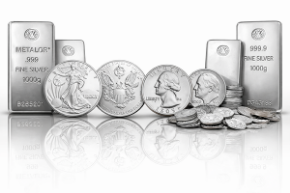
Physical Gold and Silver Have a Different Job
Physical gold and silver are not intended to perform the same job as intangible financial assets.
Within Lynette's framework, physical gold and silver held outside the traditional financial system are used to help preserve the value of labor, wealth and accumulated work.
That distinction is central to wealth preservation and sound money strategies.
But even with gold, another question remains:
Where is it, who holds it and how do you access it?
Ownership, custody and access are not necessarily the same thing.
Central Banks Are Accumulating Physical Gold
Central bank behavior provides a powerful example.
As discussed in the video, central banks have accumulated roughly 1,000 tons of gold annually over the past four or five years, almost double the average pace of the preceding decade.
But the more revealing question is not simply how much gold central banks are buying.
It is what they are doing with the gold they already own.
Lynette highlighted the Dutch central bank's decision to move more of its gold toward London, citing geopolitical uncertainty and crisis preparedness. The move was intended to improve the tradability of those reserves.
The bank already owned the gold.
The issue was where that gold sat and how readily it could be used.
What the Bank of England Reveals About Access
The Bank of England provides gold accounts in part to give central banks access to the liquidity of the London gold market.
But, as Lynette emphasized, access to those accounts remains at the bank's discretion.
That does not mean the Bank of England owns another country's gold. It demonstrates a broader point:
Owning an asset and accessing the system surrounding that asset are different issues.
History has already shown how dramatically those access rules can change.
In 1971, President Richard Nixon closed the gold window, ending foreign governments' ability to convert their dollars into gold.
The gold did not disappear.
The access changed.
Does the Federal Reserve Own U.S. Gold?
The distinction becomes even clearer when looking at the United States.
As Lynette explained, the Federal Reserve says it does not own the United States' gold. The Treasury does.
What does the Federal Reserve hold?
Gold certificates.
And according to the information Lynette highlighted, those certificates are not redeemable for physical gold.
Even at the central bank level, there is a distinction between the asset itself and a claim associated with that asset.
For individuals using gold as part of economic collapse preparation, wealth preservation or a broader sound money strategy, that raises essential questions:
What exactly do you own? Where is it? Who holds it? What has to happen before you can actually use it?
What Water, Credit and Gold Have in Common
Water, corporate credit and gold may look like three completely different subjects.
Underneath them is the same lesson.
Water may physically exist on your property, while your ability to use it depends on rules you did not write.
Corporate debt may sit inside a product labeled "conservative" or "investment grade" while the market begins pricing the underlying risk differently.
Gold may unquestionably belong to a country, institution or individual, while its location, custody and accessibility determine how readily it can be used.
The asset does not always have to change for your relationship to that asset to change.
That is why it is so important to understand what stands between you and the things you depend on before you are forced to find out.
Building a Sound Money Strategy Around What You Actually Own
A sound financial foundation starts with understanding your goals, standard of living, debt, assets inside the financial system, future income and legacy objectives.
From there, Zang International examines how physical gold and silver may support those goals as part of a broader sound money strategy.
The purpose is not fear.
It is understanding.
When financial rules, legal boundaries, custody arrangements or access conditions change, preparation gives you more ability to make educated decisions rather than reacting after the fact.
For those concerned about wealth preservation, hyperinflation, economic collapse preparation or maintaining financial freedom through uncertain monetary conditions, understanding what you actually own is only the beginning. You also need to understand how you own it, where it is held and what stands between you and access to it.
Learn more about Zang International's sound money strategies and how physical gold and silver can fit into a broader plan designed around your goals, your wealth and the future you are working to protect.

