

Energy security is no longer a distant concern. In a powerful discussion with Lynette Zang, longtime natural resource investor Rick Rule warned that the world may be entering a period of structurally higher energy prices, supply shortages, and renewed pressure on fiat currencies.
The conversation centered on oil, uranium, gold, silver, copper, banking risk, and the importance of independent thinking. For investors focused on tangible assets, wealth preservation, and sound money strategies, Rick’s message was clear: the world is changing, and preparation matters.
Energy Security Is Back
Rick explained that before the current geopolitical conflict, oil was one of the few resource sectors that remained hated and undervalued. That changed quickly.
He said the oil price has reflected the “approach of scarcity” rather than scarcity itself, but the world is now getting closer to a point where oil may have to be rationed by price in some countries.
Poorer countries without meaningful reserves are already under pressure. Rick mentioned Cuba, Sri Lanka, Pakistan, and other nations that may struggle to compete for oil in global markets.
North America, he explained, is in a stronger position. The United States exports natural gas, and Canada exports oil. That means supplies should remain available, but consumers will still pay global prices.
That matters because higher energy prices function like higher taxes. They drain liquidity from the economy and make everything more expensive.
Uranium Could Be a Major Winner
While oil and gas dominated the conversation, Rick said the energy security issue may leave its most lasting impact on uranium.
He pointed to France and Japan, whose nuclear fleets were largely built in response to earlier energy security concerns. According to Rick, uranium has unmatched energy density. Enough uranium can be stored in one warehouse to electrify Japan for years.
Rick believes the stickiness around Japanese nuclear restarts and slow plant construction is changing. In his view, the renewed focus on energy security could become a powerful long-term catalyst for uranium.
Underinvestment Has Consequences
Rick warned that the energy industry had underinvested in sustaining capital before the conflict. He described the shortfall as roughly a billion dollars a day.
That underinvestment means current energy pressures were likely coming eventually, perhaps by 2029 or 2030, but the conflict accelerated the timeline.
Even if oil prices pull back after geopolitical tensions ease, Rick does not see the underlying problem as solved. Sustaining capital investments still need to be made. Physical damage in key energy-producing regions would also need to be repaired.
His view is that the world is looking at systemically higher energy prices beginning around 2029 and beyond.
The 1970s Parallel: Oil, Inflation, and Currency Devaluation
Lynette brought the conversation back to the 1970s, when energy shocks occurred alongside major currency regime changes.
Rick said he sees strange parallels between the 1970s and the decade ahead. During the 1970s, he said the U.S. dollar lost 75% of its purchasing power. He believes the dollar could lose a similar amount over the next ten years.
That has major implications for savers, pensioners, and anyone holding long-term paper assets.
Rick also pointed out that during the 1970s, the nominal gold quote rose dramatically. He was careful not to predict a repeat, but said it would not surprise him to see gold maintain its purchasing power if the dollar loses substantial purchasing power.
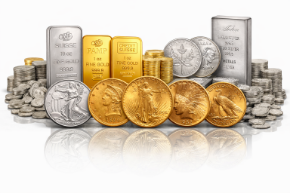
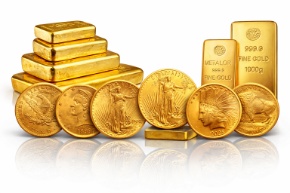
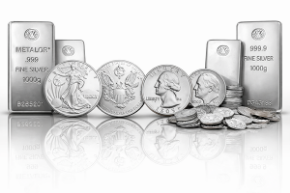
For Lynette, this reinforced the role of physical gold and silver as part of a sound money strategy, especially in a world where paper pricing does not necessarily reflect true physical value.
Central Banks Are Challenging Dollar Hegemony
Rick and Lynette discussed how central bank gold buying signals a shift away from unquestioned U.S. dollar dominance.
Rick said the hegemony of the dollar is being challenged. He connected that to concerns over the use of the SWIFT banking system and the seizure of Russian assets, which he believes caused other countries to question how reliable the U.S. is as a counterparty.
He also described U.S. Treasuries as a bad deal if the dollar is losing purchasing power faster than the interest rate paid on the bond.
Rick said he maintains liquidity mostly in U.S. dollars because that is what he spends, but he saves in gold. Since 2000, gold has been his preferred savings vehicle.
Gold Pullbacks Can Be an Opportunity for Savers
Lynette asked Rick about gold pullbacks and public nervousness when spot prices decline.
Rick’s response was direct: there is no price close to the current price that would cause him to sell. As a saver in gold, he welcomes lower prices because they allow him to accumulate more.
He drew a distinction between savers and speculators. A leveraged futures trader may fear volatility. A long-term saver may see a pullback as an opportunity.
Lynette agreed that she does not view spot gold or spot silver as a reflection of true physical value. Her focus remains on long-term strategies, not short-term trading.
Gold vs. Silver: Different Roles, Different Behavior
Rick said gold has historically done well when people are concerned about maintaining purchasing power in fiat-denominated instruments.
Silver, in his experience, behaves differently. He said gold often establishes momentum first. Once generalist investors enter the metals market, silver can outperform because of its volatility and lower unit price.
Rick personally saves in gold. He has speculated in silver in the past, particularly when silver was hated. Once silver became more loved and moved higher, he sold much of the silver in his speculative bucket.
For investors focused on sound money strategies, this distinction matters. Gold may serve as long-term wealth preservation, while silver may also play a more speculative or barterable role depending on the strategy.
AI, Data Centers, and the Energy Demand Problem
Lynette also raised the issue of AI hyperscalers, data centers, debt, equity issuance, and the massive energy demand required to support them.
Rick was careful to stay within his circle of competence. He said he does not know how to price technology companies, but he does understand energy and natural resources.
His suspicion is that if enough capital flows into AI and data centers, technology may solve part of the energy efficiency problem. But he also emphasized that the broader energy demand story remains intact.
There are still roughly a billion people without access to primary electricity. Rick believes solving that problem over the next 20 years will support long-term energy demand.
He also warned that after decades of investment in alternative energy, fossil fuels still dominate global energy use. In his view, the world does not have enough energy capacity to meet all projected demand.
Copper and the Resource Constraint
Rick described copper as another critical bottleneck.
He said meeting future demand would require more copper production in the next 15 years than has occurred in all of human history. At the same time, the copper industry has been underinvested for decades.
He cited a paper discussed at Metals Week in London stating that the ten largest copper companies would need to invest $250 billion over ten years just to maintain current output.
Current output is already in deficit to current consumption. That means price rationing may become unavoidable unless there is a synchronized global depression.
Why Self-Sufficiency Matters
Lynette connected these issues to personal responsibility and preparation.
She emphasized the importance of independence and self-sufficiency in food, water, energy, security, barterability, wealth preservation, community, and shelter.
Rick agreed, noting that governments face enormous funding limitations. He referenced federal debt and unfunded entitlement promises as part of the broader fiscal challenge.
For Lynette, this is why economic collapse preparation cannot be separated from tangible assets and practical planning. The more fragile the system becomes, the more individuals must think critically about resilience.
Banking Risk and Counterparty Exposure
The conversation also turned to counterparty risk and Rick’s involvement with Battle Bank.
Rick said banking can be a very good business if banks avoid mistakes. But many banks repeat the same errors, such as making long-term fixed-rate loans funded by overnight variable deposits.
He cited Silicon Valley Bank and the savings and loan industry as examples of what can happen when those risks are mismanaged.
Rick said Battle Bank aims to reduce risk by maintaining focus, avoiding unnecessary derivatives exposure, and lending against assets like physical gold, silver, platinum, and palladium.
He described physical precious metals as strong collateral because they can be sold quickly. He also said people who store wealth in gold and silver tend to be prudent borrowers.
The Core Warning for Investors
The message from Lynette Zang and Rick Rule was not about fear. It was about awareness.
Energy is getting tighter. Natural resources have been underinvested in for decades. Fiat currencies are losing purchasing power. Gold and silver continue to serve as critical tools for wealth preservation. And counterparty risk is becoming harder to ignore.
For investors, the takeaway is practical: think independently, understand what you own, and recognize the difference between paper promises and tangible assets.
Physical gold and silver remain central to sound money strategies because they are not someone else’s liability. In a world of rising energy costs, currency devaluation, and financial uncertainty, that distinction matters.
To learn more about Zang International’s sound money strategies and how to prepare financially with physical gold and silver, connect with the Zang International team and begin building a plan for lasting financial freedom and wealth preservation.

