



LIVE Q&A Summary
Opening Discussion: What Is the Recent Bitcoin Selloff Really Telling Us?
Rather than focusing solely on Bitcoin's recent price decline, Lynette Zang explains that investors should view the move as part of a much larger monetary transition. She reiterates her long-held view that the global financial system effectively failed in 2008 and that every historical currency system eventually gives way to another.
According to Lynette, the critical question is not whether Bitcoin rises or falls in price, but what society is transitioning toward, who benefits from those changes, and how individual freedom may be affected.
Kenneth Mraz reviews Bitcoin's technical chart, highlighting the "death cross," where the 50-day moving average falls below the 200-day moving average. He explains that while this is widely viewed as a bearish trading signal, it represents trading activity rather than intrinsic value.
Lynette contrasts Bitcoin with physical gold and silver by emphasizing that precious metals serve dozens of real-world industrial, monetary, and investment markets worldwide, while Bitcoin functions primarily as a speculative trading vehicle.
Throughout the opening discussion, both stress that understanding the difference between price movement and underlying value is essential when evaluating any financial asset.
Question 1
Do you view the cryptocurrency market as it is right now as really just another way for Wall Street, the Federal Reserve, the government, or whoever to kind of have put that pressure release valve on the currency's life cycle, like just a way to buy a little bit more time?
Lynette Zang's Answer
Lynette says yes.
She explains that throughout history, every failing currency system has transitioned into a new monetary structure. In her view, cryptocurrencies represent part of that transition rather than an escape from it.
She argues that physical gold and silver remain fundamentally different because they exist outside the financial system and cannot be created through additional debt. Paper gold contracts and digital currencies, by contrast, are financial promises that depend on counterparties and institutional control.
Lynette believes governments and financial institutions are steadily building the digital infrastructure for the next monetary system, regardless of short-term price movements in cryptocurrency markets.
She points to increasing discussion within major financial institutions about moving from paper markets toward physical markets as evidence that broader structural changes are already underway.
Question 2
George H. recently said that measuring things in terms of gold isn't necessarily the best measuring tool. What do you think about this? Is measuring the dollar in terms of gold the best way?
Lynette Zang's Answer
Lynette answers unequivocally that gold remains the best measuring stick.
She explains that for thousands of years gold acted as the anchor limiting debt creation by governments and financial institutions. Once those constraints were removed, debt itself became the foundation supporting fiat currencies.
She reviews historical developments beginning with the creation of the Federal Reserve, explaining that increasing amounts of currency were issued against the same quantity of gold, gradually weakening purchasing power.
According to Lynette, although paper gold markets remain heavily manipulated, the long-term movement in gold prices continues to reflect the ongoing decline in the purchasing power of the dollar.
Kenneth adds that an entirely digital monetary system would remove many of the remaining physical limitations on money creation, making expansion of debt even easier while leaving the public to absorb the consequences.
Question 3
Hi Lynette. Can you confirm that you are currently not holding any stocks or cryptocurrency and that all of your gold holdings are in pre-33?
Lynette Zang's Answer
Lynette confirms that she personally does not own stocks or cryptocurrency.
She explains that aside from a few modern bullion coins she keeps primarily for educational demonstrations, virtually all of her personal gold holdings consist of pre-1933 U.S. gold coins and older foreign gold coins minted before 1948.
She explains that this positioning aligns with her long-standing sound money strategy and reflects her preference for assets she believes offer the strongest legal and historical characteristics during periods of monetary transition.
Question 4
Instead of selling it and paying capital gains taxes, can I deposit my gold somewhere and borrow against it?
Lynette Zang's Answer
Lynette says this is possible.
She specifically references Battle Bank as one institution that allows customers to borrow against precious metals rather than liquidating them.
She explains that using gold as collateral can provide liquidity while allowing investors to maintain ownership of their underlying assets, though she encourages individuals to understand the terms and mechanics before pursuing such arrangements.
Question 5
Are there any books or other sources you would recommend that explain the process of currency reset, particularly with how gold and silver behave and are utilized after the first overnight reset?
Lynette Zang's Answer
Lynette recommends beginning with The Creature from Jekyll Island by G. Edward Griffin, describing it as essential reading for understanding central banking and monetary history.
She also mentions historical works covering the history of gold and notes that she is currently working on her own book addressing these topics.
Beyond books, she encourages viewers to continue watching Zang International's educational videos, which frequently explore currency resets, historical monetary transitions, and the role of physical gold and silver.
She commends viewers who actively educate themselves, emphasizing that understanding history helps individuals recognize repeating monetary patterns.
Question 6
What questions should individuals be asking their local banks about how the banks are planning the stablecoin transition?
Lynette Zang's Answer
Rather than asking about stablecoins specifically, Lynette believes people should ask a much more fundamental question:
How are currencies created and what supports their value?
She argues that many banking professionals cannot clearly explain the distinction between debt-based currency and true money.
Lynette explains that gold supports all traditional functions of money because it possesses intrinsic utility and exists without counterparty risk, while Federal Reserve notes derive value only through confidence in the issuing system.
She also discusses stablecoins, noting that they are generally backed by dollars, Treasury securities, or repurchase agreements, all of which ultimately represent additional layers of debt.
Kenneth adds that increasing issuance of corporate stablecoins could significantly reshape banking liquidity while introducing additional financial complexity.
Question 7
How do we know if we have at least 3% using metals as payment? We must be close.
Lynette Zang's Answer
Lynette explains that widespread everyday payment with precious metals is not yet the primary objective.
Instead, she believes the immediate priority is educating enough people to understand sound money principles and own tangible assets before a larger monetary transition occurs.
She says she has no precise way to measure whether society has reached the critical level of adoption she often references, but she views growing educational engagement, attendance at events, and increased interest in these discussions as encouraging indicators.
She stresses that education remains the foundation for long-term monetary change.
Question 8
Do you think they're going to do some form of revaluation on July 4th?
Lynette Zang's Answer
Lynette does not expect an immediate overnight currency reset.
She explains that major monetary resets historically occur only after confidence in an existing currency has deteriorated significantly through sustained inflation or hyperinflation.
She points to Zimbabwe as an example of a nation introducing a gold-linked currency while emphasizing the distinction between a currency merely being pegged to gold versus being fully redeemable for physical gold.
According to Lynette, true accountability only exists when currency holders can redeem their money for physical metal.
She also explains that major monetary changes typically unfold gradually before accelerating rapidly during periods of crisis.
Question 9
Will my future Social Security checks be deposited in a stablecoin account and not an account I can cash out?
Lynette Zang's Answer
Lynette says that regardless of the account name or technology used, her primary concern is the transition toward a fully permission-based financial system.
She explains that once money exists entirely in digital form, access to funds ultimately depends on the permission of financial institutions or government authorities.
To prepare for that possibility, Lynette recommends thinking about wealth in three separate layers:
- Foundation Layer: Physical hard assets owned outright, including physical gold and silver, which she believes carry no counterparty risk.
- Opportunity Layer: Investments such as stocks, AI-related investments, or other growth opportunities.
- Permission Layer: Bank accounts, brokerage accounts, retirement accounts, and other financial assets that require third-party permission for access.
She emphasizes that investors should never mistake speculative investments or permission-based assets for the secure foundation of a long-term financial strategy.
Question 10
What are your thoughts on using Battle Bank to borrow against your metals? I have concerns with the current 9 to 10% interest rate, storage fees, and counterparty risk.
Lynette Zang's Answer
Lynette acknowledges the concerns and explains that every financial decision involves tradeoffs.
She notes that she has personally used gold to help purchase a home and that Kenneth has also used precious metals for major purchases.
Rather than giving a definitive recommendation, she says she plans to discuss Battle Bank in greater detail with Rick Rule and intends to provide additional guidance after that conversation.
Her broader point is that borrowing against physical assets can be useful in certain circumstances, but investors should fully understand the associated costs and risks before proceeding.
Question 11
What do you think about the issuers of CBDCs having to lend the Treasury a dollar for every dollar coin issued? Doesn't this essentially increase the money supply leading to more inflation? And why would I trade my dollars for someone else to earn the interest on them?
Lynette Zang's Answer
Lynette agrees with the concern.
She explains that stablecoins and similar digital monetary systems create circular financial structures built upon additional debt.
Rather than eliminating systemic risk, she believes these systems simply layer more debt onto an already heavily indebted monetary system.
In her opinion, stablecoins may ultimately accelerate visible hyperinflation because policymakers will respond to the deflationary pressures created by digital monetary structures with increasingly aggressive monetary expansion.
Kenneth adds that current legislation allows stablecoins to be backed by at least one-to-one reserves, meaning significantly greater leverage could eventually be permitted, further expanding debt throughout the system.
Question 12
Please explain the collectible pre-33 versus bullion. I'm new.
Lynette Zang's Answer
Lynette explains that pre-1933 U.S. gold coins retained a unique legal classification after Executive Order 6102 because collectible coins were considered "rare and unusual."
She believes this distinction provides advantages compared to modern bullion during potential future government actions involving gold ownership.
Modern bullion coins, by contrast, were introduced after the United States abandoned the gold standard and are classified differently under current regulations.
She also notes that bullion held inside retirement accounts is generally easier for governments to access administratively because the metals remain under institutional custody.
Kenneth compares the distinction to owning an ordinary home versus owning the White House. Both are buildings, but one carries unique legal status and historical significance that provides additional protection.
Lynette emphasizes that both bullion and pre-1933 coins serve important purposes within a complete sound money strategy. Bullion supports liquidity and barter needs, while pre-1933 coins serve different long-term objectives.
Question 13
Those countries in South America are already using gold and silver to transact. Do you need central planners to tell you what system is in place?
Lynette Zang's Answer
Lynette agrees.
She explains that gold and silver have served as money throughout human history, but several generations have grown up without ever using precious metals in everyday commerce.
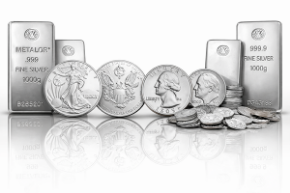
She recalls discussing silver coinage with someone who had no idea that U.S. coins once contained real silver, illustrating how completely society has been separated from sound money.
According to Lynette, understanding monetary history helps people recognize that governments have previously confiscated gold and implemented multiple overnight currency resets.
Kenneth adds that investors essentially face two choices:
- Develop a sound money strategy centered on physical assets held outside the financial system.
- Continue hoping governments will behave differently during the next monetary transition.
Both stress that preparation requires planning rather than optimism.
Key Themes Throughout the Q&A
Throughout the livestream, Lynette and Kenneth repeatedly emphasized several recurring ideas:
- The recent Bitcoin decline should be viewed within the larger context of a global monetary transition rather than as an isolated market event.
- Trading activity should not be confused with long-term value.
- Physical gold and silver remain distinct because they possess tangible utility and broad global demand beyond financial speculation.
- Stablecoins represent another stage in the evolution toward a more digital monetary system rather than a return to sound money.
- History demonstrates recurring patterns of debt expansion, currency devaluation, and monetary restructuring.
- Education is essential for helping individuals recognize these historical patterns before larger financial changes occur.
- A sound money strategy begins with tangible assets owned directly before adding investments that rely on financial intermediaries.
- Freedom ultimately depends on maintaining ownership and preserving financial choices outside permission-based systems.
Conclusion
Lynette Zang concludes by encouraging viewers to continue studying monetary history, questioning conventional assumptions, and preparing before a financial crisis forces difficult decisions.
She reiterates that Zang International's educational mission is centered on helping individuals understand historical monetary cycles, preserve purchasing power, and build sound money strategies using physical gold and silver before major systemic changes occur.

