


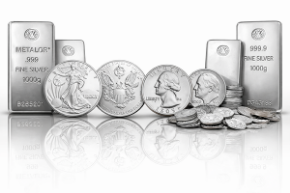

Gold & Silver Volatility Is the Warning, Not the Problem: Live Q&A Summary with Lynette Zang
In this live Q&A, Lynette Zang focused on a critical distinction many investors miss: the difference between the paper contract markets and the physical gold and silver markets. She argued that recent volatility in precious metals is not evidence that gold and silver have lost their purpose. Instead, it reflects shifting liquidity, speculative flows, and trader behavior.
According to Lynette, the deeper fundamentals remain unchanged. Debt continues to expand, purchasing power continues to erode, and central banks continue accumulating gold. She emphasized that physical gold and silver remain essential components of sound money strategies focused on wealth preservation and financial freedom.
Below is a summary of the audience questions and Lynette’s responses.
Q&A Summary
Question:
"I heard that effective 1/27 purchases over $600 will be reported. Is that true?"
Lynette's Answer:
Lynette said she was not prepared to provide a definitive answer and noted that reporting requirements can vary by state and circumstance. She committed to researching the issue further and revisiting it in a future broadcast.
Question:
"During a reset, let's say a 50% decrease, would that decrease my payment from Social Security by 50%? My mortgage is a fixed payment. If I can't pay, what happens next?"
Lynette's Answer:
Lynette explained that the bigger issue is not the nominal Social Security payment amount but its purchasing power. Even if payments remain unchanged, inflation or currency devaluation could dramatically reduce what those payments can buy.
Regarding mortgages, she noted that while fixed-rate mortgages generally maintain the same payment initially, she believes banks may eventually gain flexibility to modify loan terms under extreme conditions. Her view is that debt elimination should be part of a long-term sound money strategy.
She emphasized the importance of preparing in advance through:
- Food
- Water
- Energy
- Security
- Barterability
- Wealth preservation
- Community
- Shelter
These, she argued, become increasingly important during periods of financial instability.
Question:
"Is it conceivable that the use of physical gold and silver could be illegal if we go to CBDCs?"
Lynette's Answer:
Lynette believes it is possible that governments could once again restrict monetary gold ownership, citing historical precedents in the United States.
She discussed the distinction between:
- Monetary bullion
- Collectible gold coins
Lynette explained that collectible gold historically received different treatment than bullion during previous gold restrictions. She also highlighted ongoing efforts at the state level to reestablish gold and silver as legal tender and encouraged participation in sound money advocacy efforts.
She further expressed concerns that both CBDCs and privately issued stablecoins could increase financial control through permission-based systems.
Question:
"What will be the minimum gold-to-silver ratio over the upcoming five years?"
Lynette's Answer:
Lynette said she does not focus heavily on ratio trading because she views gold and silver primarily as strategic wealth preservation tools rather than trading vehicles.
She suggested that during hyperinflation:
- The ratio may narrow as silver outperforms.
- Once hyperinflation becomes obvious to the public, the ratio could widen again as gold resets the local currency.
Her primary focus remains on building a comprehensive strategy rather than attempting to profit from ratio fluctuations.
Question:
"Do you think it's smart for somebody to put all their wealth into gold and silver?"
Lynette's Answer:
Lynette said the answer depends on the individual's circumstances.
While she personally holds a large portion of her wealth in hard assets and sound money, she stressed the importance of building a complete foundation that includes:
- Food
- Water
- Energy
- Security
- Barterability
- Wealth preservation
- Shelter
She emphasized that everyone must make decisions based on their own comfort level and goals.
Question:
"I was talking to some stacker friends who claimed that Zang International has very high premiums. Is that true?"
Lynette's Answer:
Lynette explained that premiums vary significantly depending on the specific product being discussed.
She noted that:
- Certain specialty products may carry higher premiums.
- Standard bullion products do not necessarily have the same premium structure.
- Zang International fully discloses pricing before transactions occur.
She emphasized comparing products directly rather than making broad assumptions across all categories.
Question:
"Recommended methods to prepare for stablecoin impact in January 2027?"
Lynette's Answer:
Lynette believes stablecoins are part of a larger digital financial infrastructure that is currently being built.
She stated that:
- Adoption will likely occur gradually.
- Policymakers will attempt to make users comfortable with digital systems.
- Physical silver and fractional gold can help preserve purchasing power.
She also reiterated her belief that stablecoins could help usher in visible hyperinflation but expects the transition to happen incrementally rather than all at once.
Question:
"Should I sell my 1,000 ounces of silver?"
Lynette's Answer:
Her answer was generally no.
Lynette emphasized that silver serves an important role as a monetary metal and a form of barterability. However, she also stressed the importance of owning gold because she views gold as the primary monetary anchor.
Her position is that investors should generally hold both metals as part of a broader strategy.
Question:
"I've been trying to understand the difference between inflation and currency debasement. Are they the same thing?"
Lynette's Answer:
Lynette answered yes.
In her view, inflation is simply another way of describing currency debasement. She argued that rising prices are often a reflection of declining purchasing power rather than goods becoming inherently more valuable.
She summarized her position by saying:
- Inflation is a fiat currency phenomenon.
- Currency debasement reduces purchasing power.
- Rising prices are often the symptom rather than the root cause.
Question:
"If there is an overt confiscation of bullion, why can big banks keep their bullion while individuals may be forced to surrender theirs?"
Lynette's Answer:
Lynette argued that large financial institutions occupy a different position within the monetary system and benefit from protections unavailable to ordinary individuals.
She also discussed what she views as the special status enjoyed by banks and major corporations within the current financial structure.
Question:
"Would rolling an annuity into private equity insurance be a good strategy?"
Lynette's Answer:
Lynette strongly opposed the idea.
She expressed concerns about:
- Counterparty risk
- Insurance company claims-paying ability
- Private equity involvement in insurance products
She cited the Bank for International Settlements' classification of physical gold as a financial asset with no counterparty risk and contrasted that with contractual financial products.
Question:
"When should I sell physical gold and silver? What is the indicator?"
Lynette's Answer:
Lynette said there is no single indicator because physical metals serve different purposes within a complete strategy.
She described various roles for gold and silver, including:
- Emergency savings
- Sustaining a standard of living
- Wealth preservation
- Debt elimination
- Legacy planning
Her view is that liquidation decisions should be tied to specific goals rather than price movements alone.
Question:
"Do you think the Japanese carry trade is about to unwind?"
Lynette's Answer:
Yes.
Lynette believes carry trades globally are becoming increasingly unstable due to rising volatility, shifting interest rates, and the broader challenges associated with what she views as the late stages of the current currency cycle.
Question:
"How do we measure the value of gold when the spot price is more about what's happening in the paper markets?"
Lynette's Answer:
Lynette agreed that spot prices primarily reflect paper market activity.
She suggested monitoring:
- Physical metal availability
- COMEX inventories
- LBMA inventories
- Shanghai Gold Exchange premiums
- Central bank gold purchases
- Debt growth
- Purchasing power trends
She argued these indicators provide a more complete picture of gold's role than spot prices alone.
Question:
"Why are prominent people saying a gold standard is not feasible?"
Lynette's Answer:
Lynette believes many policymakers oppose a gold standard because it places limits on money creation.
According to her, a gold-backed system creates restrictions that reduce the ability of governments and central banks to expand currency supplies freely. She views those restrictions as beneficial because they place greater financial discipline on the system.
Question:
"Did we overprint money and have depressions before 1913?"
Lynette's Answer:
Lynette explained that governments historically suspended gold standards during periods such as wars, which allowed greater currency creation.
She argued that:
- Gold and silver standards tend to create economic flows and adjustments.
- Fiat systems create larger booms and busts due to unrestricted money creation.
She pointed to the creation of the Federal Reserve in 1913 as a major turning point in monetary policy.
Question:
"How do we expand the money supply and make loans if there is a finite amount of gold and silver?"
Lynette's Answer:
Lynette said the question raises broader issues about how sound money systems function and indicated she plans to create a future presentation specifically addressing this topic.
Her position is that currency expansion and credit creation work differently under precious-metal-based monetary systems than under fiat systems.
Question:
"How would you recommend someone with less than $100,000 enter the market?"
Lynette's Answer:
Lynette advised building a sound money foundation before engaging in speculative trading.
She warned against risking a significant portion of capital in volatile markets without first securing a strategy focused on protection and wealth preservation.
Only after establishing that foundation did she suggest individuals consider speculation or active trading.
Question:
"Should I take a withdrawal from my 401(k) and buy more gold and silver?"
Lynette's Answer:
Lynette said individuals should make decisions based on their own circumstances, but she personally favors converting fiat-denominated retirement assets into physical precious metals when appropriate.
Her primary concern is the counterparty and permission risk associated with financial assets held within the traditional system.
Question:
"Is the stock market actually going up, or are assets simply being repriced in a weakening dollar?"
Lynette's Answer:
Lynette argued that much of the apparent rise in asset prices reflects declining purchasing power of the dollar rather than genuine increases in underlying value.
She emphasized that investors should distinguish between nominal gains and real purchasing power gains.
Key Takeaway
Lynette's central message throughout the livestream was that volatility in gold and silver should not be confused with a loss of purpose. In her view, traders may change lanes and liquidity may shift, but the underlying reasons for owning physical gold and silver remain tied to debt growth, currency debasement, purchasing power protection, and long-term wealth preservation.
She encouraged viewers to focus on strategy rather than emotion, emphasizing that physical gold and silver serve as foundational components of sound money strategies designed to help preserve financial freedom during periods of monetary uncertainty.
Learn More
If you want to better understand how physical gold and silver can fit into a personalized sound money strategy, connect with a Zang International strategist. Building a strong foundation in tangible assets may help you prepare for currency devaluation, hyperinflation risks, and long-term wealth preservation challenges while positioning yourself for greater financial freedom.

