



Did the U.S. Bond Market Just Implode?
The U.S. Treasury market has long been viewed as the foundation of the global financial system. For generations, government bonds have been considered the benchmark for "risk-free" investing.
According to Kenneth Mraz, Strategy Specialist at Zang International, that foundation is beginning to show serious cracks.
While many financial commentators are focused on rapidly rising Treasury yields, Kenneth argues that the most important question is not whether yields are climbing. It is why they are climbing.
By examining historical relationships, Federal Reserve balance sheet data, and inflation trends, Kenneth walks through the mathematics behind today's bond market and explains why rising interest rates could eventually create a dangerous feedback loop for the U.S. government.
Understanding How Treasury Bonds Work
Whenever the federal government spends more money than it collects in taxes, it finances the difference by issuing Treasury securities.
Investors, institutions, and foreign governments purchase these bonds in exchange for interest payments over time.
That interest payment is commonly referred to as the yield.
Kenneth simplifies the concept by comparing yields to compensation for taking risk.
If a borrower appears financially stable, lenders require only modest compensation.
If a borrower appears increasingly risky, lenders demand significantly more compensation before they are willing to lend additional money.
According to Kenneth, today's rapidly rising Treasury yields suggest lenders are asking for much greater compensation than they have in the past.
The critical question becomes:
What is making lenders demand that additional compensation?
Two Competing Theories Behind Rising Treasury Yields
Kenneth outlines two possible explanations.
Theory One: The Government's Debt Has Become Unsustainable
The first theory argues that investors are becoming increasingly concerned about the federal government's financial position.
Under this view, lenders recognize that the government continues to accumulate debt without generating enough revenue to meaningfully reduce its obligations.
As confidence weakens, investors require much higher yields before agreeing to purchase new Treasury securities.
If confidence were to disappear entirely, Kenneth explains that the Federal Reserve could eventually become the buyer of last resort by creating new money to purchase government debt.
Theory Two: Inflation Is Driving Higher Yields
The second theory focuses less on the size of government debt and more on inflation.
Kenneth uses the analogy of a "diluted punch bowl."
If an investor lends money at a 4% yield while inflation is running at 5%, that investor is effectively losing purchasing power every year.
Rather than accepting guaranteed losses, lenders demand higher yields to offset inflation.
Under this explanation, rising Treasury yields reflect efforts to preserve purchasing power rather than concerns about immediate government default.
Looking for the Evidence
Rather than relying on opinion, Kenneth examines historical data to determine which explanation better fits current market conditions.
Historical Relationship Between Inflation and Interest Rates
Looking back over approximately 45 years, Kenneth notes that government interest payments have generally moved alongside inflation and nominal GDP.
Historically, higher inflation has been accompanied by higher interest rates because lenders seek compensation for declining purchasing power.
If investors were abandoning U.S. debt entirely, Kenneth argues that Treasury yields would likely break sharply above this long-term historical relationship.
Instead, current yields continue tracking closely with inflation expectations.
According to Kenneth, this supports the inflation explanation rather than an immediate collapse in confidence.
What Is the Federal Reserve Doing?
Kenneth then examines another important piece of evidence.
If private investors refused to buy Treasury debt altogether, the Federal Reserve would likely need to dramatically expand its balance sheet through quantitative easing by purchasing those securities.
Instead, Kenneth points out that bank reserves have declined from recent highs.
In his view, this indicates that private institutions are still purchasing Treasury debt.
The difference is that they are demanding substantially higher yields before doing so.
What Triggered the Latest Move?
Kenneth also looks at the timing of recent increases in Treasury yields.
He notes that yields accelerated alongside two specific developments:
- Rising oil prices
- Higher-than-expected Consumer Price Index (CPI) data
These events reinforced concerns that inflation may remain elevated for longer than markets previously anticipated.
From Kenneth's perspective, inflation expectations remain the primary driver behind today's higher yields.
Why Today's Inflation Problem Could Become Tomorrow's Debt Crisis
Although Kenneth concludes that inflation is currently driving higher Treasury yields, he warns that today's situation could eventually evolve into a much larger problem.
The U.S. government continually refinances maturing debt rather than paying it off outright.
That strategy worked well when interest rates were historically low.
During the 2019 period and subsequent lockdown era, trillions of dollars of government debt were issued at exceptionally low interest rates.
As those securities mature, they must be refinanced at today's significantly higher rates.
According to Kenneth, that dramatically increases the government's interest expense.
The Treasury's Refinancing Challenge
Kenneth compares the situation to refinancing a mortgage.
Imagine securing a loan at 1% interest only to discover years later that refinancing now requires paying 5%.
Monthly payments increase substantially even though the original loan amount remains unchanged.
Kenneth argues that the Treasury now faces a similar challenge.
As low-interest debt matures, new debt must be issued at much higher yields.
The result is rapidly rising interest costs.
He notes that government interest payments have now grown to exceed the size of the U.S. military defense budget.
Because the federal government continues operating with large deficits, Kenneth explains that additional borrowing becomes necessary simply to make those interest payments.
The Bond Market Doom Loop
Kenneth describes this process as a self-reinforcing cycle.
The sequence works as follows:
- Inflation pushes Treasury yields higher.
- Higher yields increase government interest expenses.
- Larger interest expenses require issuing additional Treasury debt.
- Greater bond issuance increases supply.
- Increased supply places downward pressure on bond prices.
- Lower bond prices require even higher yields to attract buyers.
According to Kenneth, this creates a financial "doom loop."
Each round of borrowing increases pressure on future borrowing costs.
Over time, the cycle becomes increasingly difficult to control.
What Happens If the Federal Reserve Steps In?
Kenneth argues that if private demand for Treasury securities weakens significantly, the Federal Reserve could eventually be forced to purchase increasing amounts of government debt.
He describes this as creating new money to absorb unwanted bonds.
In his view, such an outcome would risk significantly reducing the purchasing power of fiat currency.
While Kenneth does not state that this outcome has already occurred, he presents it as the potential end stage of the current debt cycle if borrowing costs continue accelerating.
Preparing Before the Trapdoor Opens
Kenneth concludes by encouraging viewers to think strategically rather than reactively.
He presents two possible responses.
The first is simply observing financial developments while leaving wealth fully exposed to the traditional monetary system.
The second is evaluating whether assets remain adequately protected against the risks he believes are developing within the current financial system.
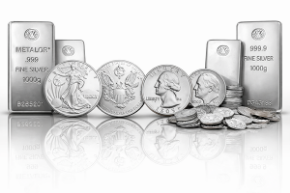
According to Kenneth, Zang International focuses on helping individuals identify vulnerabilities within their financial foundation and explore sound money strategies designed around tangible assets, including physical gold and silver, with the goal of wealth preservation during periods of financial uncertainty.
Final Thoughts
Kenneth Mraz's analysis focuses on the mathematical relationships behind Treasury yields rather than market speculation.
His conclusion is that today's bond market stresses appear primarily tied to persistent inflation rather than an immediate collapse of the U.S. debt market.
However, he cautions that inflation-driven borrowing costs can eventually create a refinancing cycle that places increasing strain on government finances.
Whether or not that transition ultimately occurs, Kenneth emphasizes the importance of understanding the structural forces shaping today's bond market and considering how sound money strategies may help support long-term financial freedom, wealth preservation, and economic collapse preparation through ownership of physical gold and silver.
Learn More About Sound Money Strategies
Understanding how rising debt, inflation, and Treasury markets interact is an important step toward preparing for an uncertain financial future. If you want to learn more about Zang International's approach to sound money strategies, wealth preservation, and protecting purchasing power with physical gold and silver, connect with a Strategy Specialist and explore educational resources designed to help you build a stronger financial foundation before the next major shift unfolds.

