

The biggest changes in money do not always happen overnight. Sometimes they occur so slowly that most people never realize the system has changed.
The currency may keep the same name. The bills may look familiar. Account balances may still appear on a screen. Commerce may continue as usual.
But underneath, the substance of the money can be completely different.
That is the central warning behind Lynette Zang’s analysis of the modern dollar. Money is not supposed to be merely something people spend. It is supposed to carry the value of their labor through time.
When money can no longer perform that function, workers may continue earning and saving while gradually losing control over the value they created.
Here are four hidden ways the dollar may be costing you.
- The Dollar Is Failing to Protect the Value of Your Labor
Every paycheck represents something real.
It represents time, energy, skill, effort, sacrifice, hopes, and dreams. Money is supposed to preserve the value of that completed labor so it can be used in the future.
To understand why this matters, consider the four traditional functions of money:
- A unit of account used to value and price goods
- A medium of exchange used in transactions
- A standard of payment used to settle obligations
- A store of value that carries purchasing power through time
The fourth function is the one that protects the individual.
A currency may still work at the grocery store, pay a utility bill, or settle a debt while failing as a store of value. The system can continue functioning even as the purchasing power of past labor is steadily weakened.
This is why Lynette distinguishes between money and currency.
Currency can be created without limit. Human labor cannot.
Your time is limited. Your energy is limited. Your productive years are limited. When currency units and financial claims can expand far faster than real goods and services, the value of accumulated labor can be diluted.
Sound money places a limit on those promises.
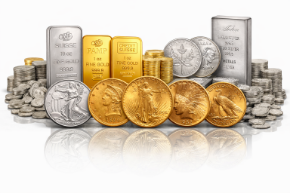
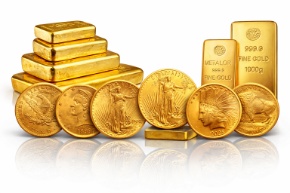
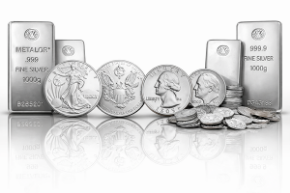
Physical gold and silver cannot be created out of thin air by a central bank. Their scarcity restricts the creation of unlimited claims against limited real value. That is why tangible assets have historically played such an important role in sound money strategies and wealth preservation.
- The Dollar ChangedFroman Asset Into a Promise
The Ship of Theseus presents a simple question: If every plank of a ship is gradually replaced, is it still the same ship?
The name remains the same. The shape may remain the same. People still board it and call it by the same name.
But underneath, every part has changed.
Lynette uses this idea to explain what happened to the dollar.
A gold dollar is an asset. A gold certificate is a claim on an asset. A Federal Reserve note is a debt instrument and a promise to pay.
All may be called dollars, but they are not the same thing.
One is direct ownership. One is a claim. One depends on a financial system honoring its promises.
This change happened gradually through a repeating monetary pattern:
Create, Debase, Replace
First, a monetary system is created by borrowing trust from something real, scarce, and widely valued, such as gold or silver.
Next, a more convenient substitute is introduced. This may take the form of paper notes, bank deposits, or digital balances.
Once the substitute gains public acceptance, the quantity of claims can expand. Debt grows. Currency units multiply. Purchasing power weakens.
That is debasement.
Finally, a replacement system is introduced as the solution. It is described as faster, more efficient, more convenient, and more modern.
The public sees the same familiar word, dollar, but the monetary foundation has changed one plank at a time.
The transition from gold coins to certificates, Federal Reserve notes, bank deposits, and digital balances represents a movement away from direct ownership and toward promises.
A claim is not the asset.
Permission is not possession.
Access is not ownership.
- Debt-Based Money Makes Your Wealth Dependent on Access
Most people believe they are paid in money. In practice, they are generally paid through debt-based currency, bank deposits, Federal Reserve notes, and digital balances.
These instruments are useful. They can pay bills, settle transactions, and move quickly through the financial system.
But usefulness is not the same as wealth preservation.
When labor is paid in debt-based currency, the value of that labor is measured through someone else’s promise. That promise depends on confidence, liquidity, functioning institutions, and continued access.
This distinction becomes critical during periods of monetary stress.
In 1971, President Richard Nixon ended the dollar’s final official link to gold. Foreign governments had been able to bring dollars back to the United States and request gold in return. Over time, however, the number of dollar claims grew larger than the available gold collateral.
The system faced a choice: honor the promise or change the rules.
The rules were changed.
The dollar continued to function as a unit of account, medium of exchange, and standard of payment. Paychecks continued. Markets remained open. Commerce did not immediately stop.
Because the system still appeared to work, the most important loss was easy to overlook.
The store-of-value function had been removed.
The dollar continued carrying transactions, but it no longer carried the value of labor in the same way. The same currency name remained, yet its relationship to ownership and purchasing power had changed.
This demonstrates an uncomfortable truth: A financial system can function while slowly failing the people who depend on it.
- Digital Money Could Move YouFromOwnership to Permission
The next transformation of money is already being presented as technological progress.
Stablecoins, tokenized assets, central bank digital currencies, faster payment systems, and digital settlement rails may offer real efficiencies. Transactions could occur instantly. Settlement could become faster. Financial systems could operate more smoothly.
But efficiency is not the only question.
The deeper questions are:
- Does the new system preserve ownership?
- Does it protect labor?
- Does it store value?
- Is it money, or is it another claim?
- Who controls the financial rails?
- Can access, limits, or rules be changed?
Lynette warns that monetary replacements do not begin only after the old system collapses. They are introduced while the old system still appears to function.
People often wait for a visible economic collapse before recognizing a monetary transition. But the system may be rebuilt while everyone is still using it.
Digital money can function extremely well as a payment tool while increasing dependence on permission-based systems. When wealth exists only inside financial rails controlled by institutions, corporations, central banks, or governments, access may be restricted or rules may be altered.
Negative interest rates could reduce principal held in an account. Stablecoins issued by corporations could encourage users to remain inside a specific commercial ecosystem. Programmable features could potentially affect where, when, or how money is used.
These concerns are not an argument against technology.
Technology can be useful.
The issue is whether the monetary system protects the individual or moves the individual further from ownership and deeper into someone else’s system.
The central question is simple:
Does your money carry the value of your labor forward, or does it carry you further into a system controlled by someone else?
Why Physical Gold and Silver Remain the Foundation
The response to monetary change is not fear. It is foundation.
That is why Zang International emphasizes physical gold and silver as the base of a sound money strategy.
Physical metals are not presented as a short-term trade or speculation. They represent direct ownership of tangible assets without relying on an intermediary, counterparty, digital balance, or promise that another party must honor.
A sound money strategy can be viewed in layers.
At the foundation are physical gold and silver held through direct ownership.
Above that are opportunity assets, including stocks, bonds, royalties, and exchange-traded products. These investments may provide growth or income, but their values are ultimately expressed through the prevailing currency system.
At the top is the permission layer, including banks, brokerages, payment processors, and digital platforms. These services may perform important functions, but they depend on access and institutional rules.
The foundation is intended to protect exposure to the layers above it.
It is not the opportunity assets or permission-based systems that protect the foundation.
Physical gold and silver matter because they do not depend on a currency issuer maintaining purchasing power. They are monetary assets held outside the debt-based banking system.
They offer a form of ownership that is fundamentally different from a bank balance, debt instrument, or digital claim.
The Dollar May Still Float, but Is It Carrying You?
The dollar may still say dollar.
A balance may still appear on a screen.
Payments may still clear.
Markets may still open.
The financial ship may still appear to be floating.
But if the underlying substance has changed from an asset to a claim, from a claim to debt, and from debt toward programmable digital access, then the relationship between labor, money, and ownership has also changed.
Every monetary transition moves the public further from direct ownership and closer to access, permission, and institutional control.
That is why understanding the pattern matters.
Create. Debase. Replace.
The name remains familiar while the monetary planks are gradually exchanged.
The question is not simply whether the system still works. The question is whether it is still carrying the value of your labor to the destination you expected.
Build a Sound Money Strategy for the Changing Monetary System
Preserving financial freedom begins with understanding the difference between an asset and a claim, ownership and access, and currency performance and genuine protection.
Zang International helps clients build and execute personalized sound money strategies supported by physical gold and silver. A strong tangible asset foundation may help preserve wealth, reduce counterparty exposure, and prepare for ongoing changes in the global monetary system.
Learn more about Zang International’s sound money strategies and speak with a strategy specialist about building a physical gold and silver foundation designed to protect the value of your labor through time.

