



In this live Q&A, Lynette Zang examined a common thread running through water rights, corporate credit, and physical gold: the asset itself may not change, but the rules governing access, ownership, custody, or use can.
Water may physically exist on your land while legal rules determine how you can use it. A bond may retain an investment-grade label while professional markets begin pricing it as something riskier. Gold may unquestionably belong to an owner while custody and access determine whether that owner can actually use it when needed.
The central question Lynette encouraged viewers to ask was simple: What are you counting on, and what stands between you and it?
She then answered audience questions about physical gold and silver, tokenization, CBDCs, cash, bond markets, precious metals custody, portfolio strategy, inflation, financial control, and sound money strategies.
Question: “Hi, Lynette. If the strategy has raw gold, it does. What things might you expect to pay with that as opposed to silver? Hoping to understand where raw gold is used in place of silver.”
Lynette explained that raw gold and raw silver can perform some similar functions, but they are different tools for different jobs.
She personally views one-ounce raw gold coins and other sizes of raw gold as useful for emergency savings. She discussed potential uses including maintaining access to funds if normal financial accounts become unavailable, addressing chronic medical expenses, and paying real estate property taxes.
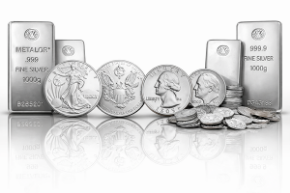
Silver can perform similar functions, but much more physical silver may be required to represent the same amount of value. Lynette described silver as the secondary monetary metal and gold as the primary currency metal.
Her emphasis was not on automatically exchanging one metal for another. Someone who already owns substantial silver has already incurred the cost of acquiring it, and that silver can still perform important functions.
The broader sound money strategy begins with the goal, not the product. Once the goal is identified, the appropriate gold or silver tool can be selected.
Question: “How would tokenization of real estate affect a homeowner? The country still holds the paper deed to the home in your name.”
Lynette said she has followed tokenization for years because of its potential to bring more assets and collateral into the financial system.
She described tokenization as breaking an asset or its equity into smaller digital units that can be traded more easily. In the case of a home, she warned that tokenized home equity could make it easier for owners to spend or trade away pieces of the equity they have accumulated.
She also argued that tokenization expands the collateral available inside the banking and financial system. Those digital units could potentially create more opportunities for institutions to borrow and trade against underlying assets.
Lynette connected this to the broader transition toward 24/7 digital markets. Her concern is that assets that were previously more difficult to financialize can increasingly be brought into the system as collateral.
She contrasted that structure with physical gold and silver, emphasizing that tangible assets have historically placed limitations on the creation of debt because the underlying physical asset cannot simply be created without limit.
Question: “Hi, Lynette. I have 33% of my wealth in gold and silver, 33% in property, and 33% in cash. If CBDCs and stablecoins become forced on us, would cash be totally eliminated? Should we stash cash?”
Lynette said the appropriate amount of cash depends on individual circumstances, including age, needs, goals, and how that cash is expected to be used.
She believes cash still has a role within a broader strategy, particularly cash held outside the banking system. However, she does not expect the transition away from cash to necessarily happen through an immediate formal ban.
Instead, she described a gradual process in which consumers are encouraged to use debit cards, credit cards, and digital payment rails more frequently until they voluntarily use less cash.
Lynette pointed to businesses that no longer accept cash as an example of this shift in behavior. Her own preference is to use cash for transactions whenever practical.
She also discussed central-bank interest in digital systems because physical cash creates limitations on the implementation of deeply negative interest rates. Her concern is that increasingly digital forms of money could give financial authorities greater control over currency held within the system.
Her conclusion was that some physical cash can remain useful, but the amount should be determined as part of an individualized financial strategy rather than by applying one percentage to everyone.
Question: “I know you can sell gold easy, but what about silver? When it gets up to $150, who’s going to buy it?”
Lynette argued that the more important question is not simply whether silver reaches a particular dollar price, but what has happened to the purchasing power of the currency used to measure it.
She said physical silver has many global uses and emphasized that its characteristics have not been successfully recreated as a perfect substitute.
From her perspective, a rising nominal silver price reflects both demand for silver and declining purchasing power in fiat currency.
She also pointed to strong physical demand and premiums in global markets as evidence that demand can remain substantial as nominal prices rise.
Her broader point was that physical silver is not simply a speculative asset. Within her framework, it serves as a tangible asset with monetary and practical functionality.
Question: “Do you have a recommendation for what percentage of a portfolio should be in gold? And would you calculate that as a percentage of total dollars or the value of the implied ounces?”
Lynette said Zang International does determine gold positioning, but not by applying a universal percentage to everyone.
The process begins with the individual's goals and an assessment of what gold needs to accomplish within the overall strategy.
She also discussed what she calls the fundamental value of gold. Her framework compares the expansion of global debt and fiat currency against the finite supply of physical gold.
Lynette's central argument was that fiat currency is debt-based and can be created in expanding quantities, while gold requires time, energy, and labor to produce and remains physically durable.
Rather than choosing a gold percentage simply because it is a commonly recommended allocation, Lynette believes positioning should be based on the purpose the gold is intended to serve.
Question: “How is the empire going to steal from smaller nations if they are not allowed to print notes?”
Lynette connected the question to the changing international monetary system and the movement toward digital currencies and payment infrastructure.
She noted that central banks and governments observe experiments taking place in other countries, including efforts involving central bank digital currencies and new payment systems.
According to Lynette, limited voluntary adoption in some countries demonstrates why governments may focus first on building the infrastructure required for widespread use.
Her concern is that once those rails exist, the rules surrounding their use can subsequently be expanded or modified.
She argued that this is one reason the Sound Money Movement matters. In her view, demanding redeemable gold and choosing physical gold and silver are ways individuals can express support for sound money principles.
Question: “Are we on track for Agenda 2030 in your opinion, particularly the financial controls?”
Lynette said she believes significant elements of the financial transition are continuing to move forward.
Although supply-chain trends have shifted, including efforts to bring some production closer to domestic markets, she said the financial system has continued becoming more integrated.
She pointed specifically to expanding digital financial infrastructure and crypto-related payment rails.
Lynette's response was that individuals should not remain passive. She encouraged viewers to learn how the system works, support sound money, and use purchasing decisions as a way of expressing their preferences.
For Lynette, physical gold and silver represent tangible assets that can exist outside the expanding digital financial structure.
Question: “Hi Lynette. Please can you explain what is happening in the bond market and what is the topic for Sound Money Hour next week?”
Lynette focused on the BBB portion of the corporate bond market, which is the lowest level still considered investment grade.
If bonds are downgraded below that threshold, they move into high-yield or “junk” status. That matters because some funds, insurance products, ETFs, pensions, and other portfolios may be limited by their prospectuses to holding investment-grade securities.
If enough bonds are downgraded simultaneously, those institutions could be forced to sell.
Lynette explained that rising interest rates also push the market value of existing bonds lower. If declining prices generate margin calls or other forms of forced liquidation, additional selling could potentially reinforce the decline.
She emphasized that professional traders appear to be pricing some bonds as riskier than their official ratings suggest. In her view, the change in market behavior beneath the rating is the warning worth watching.
Regarding Sound Money Hour, Lynette said the upcoming program would address questions related to developments in Texas and that she had been communicating with Daniel Diaz about participating.
Question: “What do you think about gold holding companies where you can buy physical gold, but they store it and hold it for you?”
Lynette said the answer depends on what the gold is intended to accomplish.
For gold or silver intended for immediate barter or emergency access, she believes the metal should be kept close enough that the owner can access it immediately.
For other parts of a sound money strategy, private vault storage may be appropriate.
Lynette said she personally uses a private vault where her holdings are maintained in her name and accessible only to her. She emphasized that custody, ownership, and access should all be understood before selecting a storage arrangement.
Convenience alone should not determine how crisis-oriented assets are stored.
Question: “Doesn’t colloidal silver turn you blue if you drink it? What even is it for?”
Lynette explained that she personally uses colloidal silver and described how it is produced by dispersing very small amounts of silver into water.
She discussed her personal uses for it, while explicitly acknowledging that she is not providing medical advice and encouraging viewers not to rely solely on her comments.
Jessica also emphasized that the discussion was not medical advice.
Because this portion of the livestream concerned personal wellness rather than financial strategy, viewers should independently research health-related claims and consult appropriate professionals when making medical decisions.
Question: “Can you please comment on the immediate, medium, and long-term implications of the universal rise in bond yields that we are seeing, effects on the metals, stocks, etc.?”
Lynette explained that higher government bond yields can initially make those bonds appear more attractive to investors seeking income.
Higher interest rates can also attract capital toward a currency and away from other markets.
However, she emphasized the inverse relationship between yields and bond prices. When yields rise, existing bond values fall.
The intermediate concern is forced selling. If declining bond prices create losses, margin calls, or institutional selling requirements, that selling can push yields higher and prices lower.
Lynette connected the current environment to the end of the roughly 40-year declining interest-rate cycle that she says turned in 2022.
She described the previous cycle as one in which central banks repeatedly lowered interest rates to encourage borrowing and economic activity, then raised rates when inflation became too obvious.
In her framework, the major pattern change in interest rates is an important warning because transitions in long-term monetary cycles can create significant financial disruption.
Question: “Are you seeing an overall downgrading?”
Lynette said she is not yet seeing rating agencies broadly implement the downgrades that market behavior appears to be anticipating.
Instead, she sees traders effectively downgrading debt through pricing.
This distinction is important because market participants can demand higher yields and lower prices before an official credit-rating agency changes its assessment.
Lynette believes the market behavior may represent an early warning of future formal downgrades.
She also reiterated a concern about the structure of the ratings industry, noting that corporations issuing debt pay agencies to rate that debt.
Question: “Lynette, any update about Gerald Celente coming in for a talk?”
Lynette said the interview with Gerald Celente was scheduled to be filmed on October 7, with publication expected shortly afterward.
Question: “I live in Texas. Do you have an opinion of Texas’ new gold deposit backed by debit card? Thanks for all you do.”
Lynette said she had recently produced a separate program explaining her perspective on developments involving Texas and gold.
She also said the topic would be discussed during the upcoming Sound Money Hour with Daniel Diaz, where viewers could submit additional questions during the live program.
Her broader concern with systems that place gold onto digital payment rails is to examine what the owner actually possesses, who controls the underlying asset, how redemption works, and what stands between the owner and the physical metal.
Question: “It’s been over a year since I asked. Do you have an active strategy partner in Australia now?”
Lynette said Zang International does not yet have a formal strategy partner in Australia.
However, she said the company can still execute its strategy for clients there and has a trusted contact in Australia for the locally held barterable portion of the strategy.
Question: “Hi from Canada. Is it a good strategy to get 500 ounces of silver, hoping by 2030 or later we’ll go 15-to-1 gold? Still also having some gold to diversify, but silver is on sale compared to gold. Does it make sense?”
Lynette said she prefers to focus on functionality rather than the gold-to-silver ratio.
She owns substantial silver herself and uses it primarily for the barterable portion of her strategy. However, she views silver as the secondary monetary metal and gold as the primary currency metal.
Lynette cautioned against approaching precious metals solely with a trader's mindset based on reaching a particular ratio and then selling.
Her research into hyperinflationary periods leads her to expect silver could initially move faster and narrow the gold-to-silver ratio before gold ultimately becomes increasingly important for wealth preservation as a currency crisis advances.
Within her sound money strategy, gold is intended to preserve purchasing power so it can later be converted into undervalued income-producing assets.
Silver and gold therefore perform different jobs. Lynette emphasized again that the starting point should be the individual's goals rather than a predetermined quantity or ratio.
Question: “Lynette, how can the Fed be independent if the president picks the Fed chair? Also, if the Treasury issues and sells bonds, how can the Fed be independent if it chooses the interest rates of the bonds?”
Lynette rejected the idea that the Federal Reserve is truly independent.
She argued that while the Federal Reserve is presented as independent, the relationships among the Federal Reserve, Treasury, government debt, and the banking system make that characterization misleading in her view.
She traced the structure back to the creation of the Federal Reserve system in 1913 and emphasized the relationship between debt and the creation of Federal Reserve notes.
Lynette said the question deserved a dedicated program because understanding central-bank independence is important to understanding the broader monetary system.
Question: “When we exchange the gold for fiat again, how can we be sure that the money in the bank is safe then?”
Lynette said there is always risk, which is why execution matters.
Within her strategy, converting gold back into fiat currency would be done as close as possible to the transaction for which the currency is needed.
For example, if gold were being converted to purchase an income-producing building, the conversion could occur immediately before completing the purchase rather than leaving the proceeds sitting within the banking system for an extended period.
She also said future conditions may make direct gold transactions possible in certain private transactions if both parties understand the condition of the fiat currency.
The exact method will depend on the monetary environment and the asset being purchased at that time.
Question: “Can you comment on insurance for metals held at home? Is there a certain amount before it’s viable? Pros and cons, costs, etc.?”
Lynette said insurance is available specifically for precious metals held at home.
She said Zang International is familiar with multiple insurers that can provide this type of coverage and encouraged viewers to speak with a strategy specialist for information they can independently evaluate.
Lynette personally uses additional insurance riders because her metals are held in different ways.
She recommended first determining how much coverage an existing homeowners policy provides, since standard coverage may not be sufficient for meaningful precious-metals holdings.
In her view, supplemental insurance is both practical and important when keeping physical gold and silver at home.
She also connected the discussion to what she calls dynastic wealth, which she described as wealth that has remained within families for at least 300 years and historically includes three categories: gold, real estate, and rare collectibles.
Question: “I am in Northern California and our gas and electricity is supposed to be green. Lynette, can you look at that and explain all the fees? I am using less gas and electricity and I pay more. Why?”
Lynette said she would investigate the subject because energy costs affect everyone.
Her broader explanation was that energy, food, water, and other necessities have increasingly become financialized and traded through markets rather than being determined only by straightforward local supply and demand.
She also warned that expanding AI data centers could create additional competition for energy infrastructure.
For Lynette, this reinforces the importance of building greater resilience through the sovereignty framework she frequently discusses:
- Food
- Water
- Energy
- Security
- Barterability
- Wealth preservation
- Community
- Shelter
She described physical silver as her primary tool for barterability and physical gold as her primary tool for wealth preservation, while emphasizing that community may be the most important component of the entire framework.
The Bigger Lesson: Know What Stands Between You and What You Depend On
The three headline stories that opened this livestream all pointed to the same underlying principle.
Water can physically exist on your land while regulation determines whether and how you can use it.
An investment can still carry an investment-grade label even when professional traders begin pricing it as something much riskier.
A country can own physical gold while still caring deeply about where that gold is stored, who holds it, and how quickly it can be accessed.
The same questions apply at the individual level.
What do you own? Where is it? Who controls it? What rules govern your access? And what happens if those rules change during a crisis?
For Lynette, understanding those dependencies is a central part of preparing for monetary instability, hyperinflation, and broader financial-system change.
Zang International's approach begins with personal goals, including standard of living, debt, wealth held inside the financial system, future income, legacy planning, and financial freedom. From there, physical gold and silver can be evaluated as part of broader sound money strategies designed around barterability, wealth preservation, accessibility, and resilience.
If you want to understand how tangible assets may fit into your own preparation, speak with a Zang International strategy specialist to learn more about sound money strategies and how physical gold and silver can support your goals before the rules underneath the financial system change again.

